Introduction
Whether you are crafting a simple bookshelf, building a heavy-duty workbench, or constructing heirloom furniture, how you connect two pieces of timber determines the strength, longevity, and appearance of your project. Having wood joinery explained clearly is essential for woodworkers of all skill levels, as choosing the wrong joint can lead to structural failure, unsightly gaps, or unnecessary hours spent in the shop https://fibozin.com.
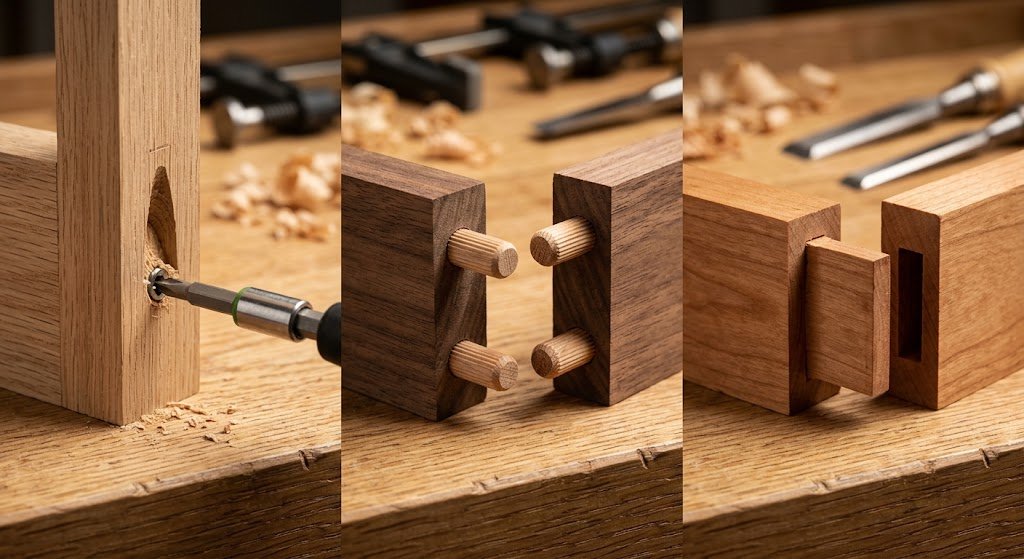
While there are dozens of traditional and modern methods available, three core techniques dominate modern carpentry: dowel joints, pocket hole joints, and classic mortise and tenon joinery. Each method balances structural integrity, execution speed, tool requirements, and visual appeal differently. In this comparative guide, we break down how these joinery techniques work, where they excel, and how to select the ideal joint for your next build.
Key Takeaways
- Pocket Holes Offer Maximum Speed: Ideal for cabinet face frames and quick DIY projects, pocket hole joinery requires minimal setup and allows immediate handling without waiting for glue to cure.
- Dowels Provide Balanced Strength and Concealment: Fluted hardwood dowels reinforce butt joints invisibly, delivering strong alignment and holding power without exposed metal hardware.
- Mortise & Tenon Remains the Gold Standard for Strength: For high-stress load-bearing structures like dining table legs and chair frames, mortise and tenon joints provide unmatched mechanical interlock and glue surface area.
- Tool Investment Varies Significantly: Pocket holes rely on specialized drill jigs and self-tapping screws, dowels require precision alignment jigs or dowel centers, and mortise & tenon can be cut using traditional hand chisels or dedicated hollow-chisel mortisers.
- Wood Movement Matters: Understanding end-grain vs. face-grain glue adhesion helps you pick a joint that resists expansion and contraction across seasonal humidity changes.
1. Pocket Hole Joinery: Fast, Simple, and Effective
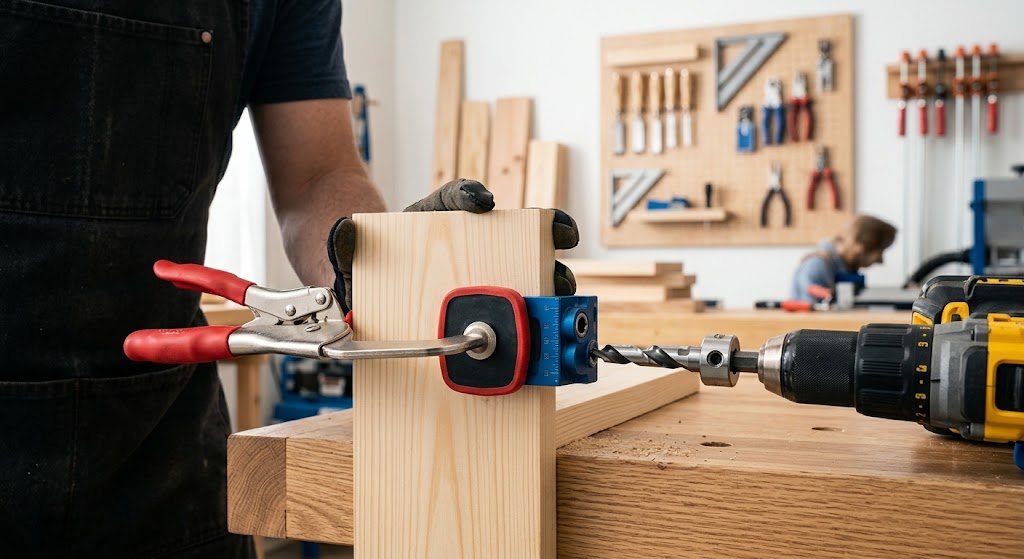
Pocket hole joinery is a modern technique where a stepped drill bit creates an angled counterbored hole into one board, allowing a specialized self-tapping screw to drive directly into the mating piece.
Key Advantages:
- Speed & Immediate Clamping: Because the self-tapping screw acts as an internal clamp, you do not need to leave physical clamps on the project while the PVA wood glue cures.
- Low Learning Curve: Beginners can master pocket holes in minutes using entry-level jigs from manufacturers like Kreg or Armor Tool.
Disadvantages:
- Exposed Screw Holes: Unless covered with wooden plugs or hidden on the underside/back of a build, pocket holes leave visible steep oval pockets.
- Moderate Shear Strength: While strong enough for cabinets, face frames, and light tables, pocket screws lack the heavy structural load capacity needed for unbraced table bases.
[Internal Link: Explore our full guide on softwood vs. hardwood to match the right timber density with your joinery tools]
2. Dowel Joinery: Strong, Invisible Structural Alignment
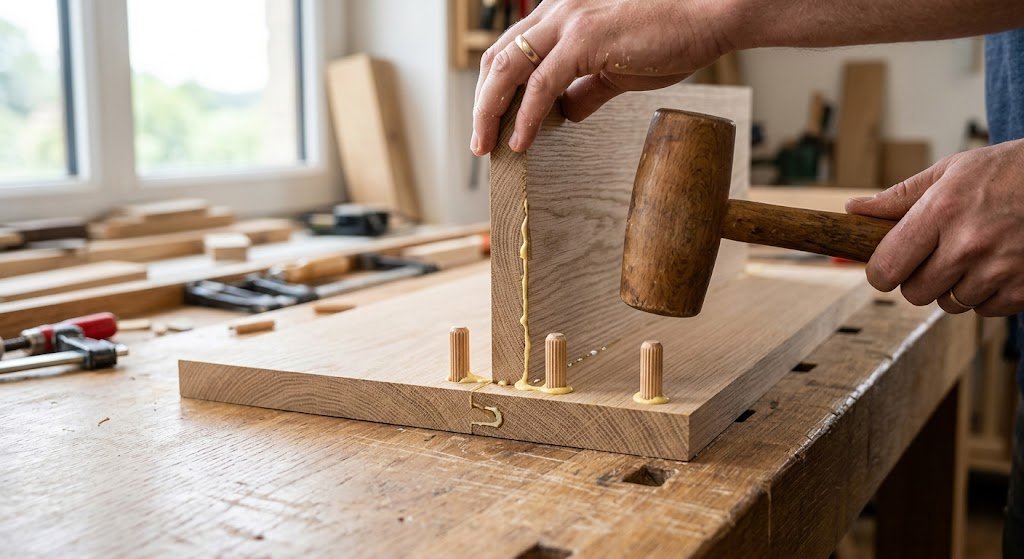
Dowel joinery uses cylindrical fluted hardwood pins inserted into precisely aligned, matching holes drilled in both mating pieces of wood.
Key Advantages:
- Completely Concealed: Once glued and assembled, dowel joints are 100% hidden, maintaining clean lines on fine furniture.
- Increased Shear Strength: Hardwood dowels bridge across the joint line, dramatically improving resistance to lateral twisting and shearing forces compared to simple butt joints.
Disadvantages:
- Requires Strict Drilling Accuracy: If holes are misaligned by even half a millimeter, the joint will not close flush. Using a self-centering doweling jig or dowel centers is mandatory Wikipedia.
3. Mortise and Tenon: The Time-Tested Interlocking Standard
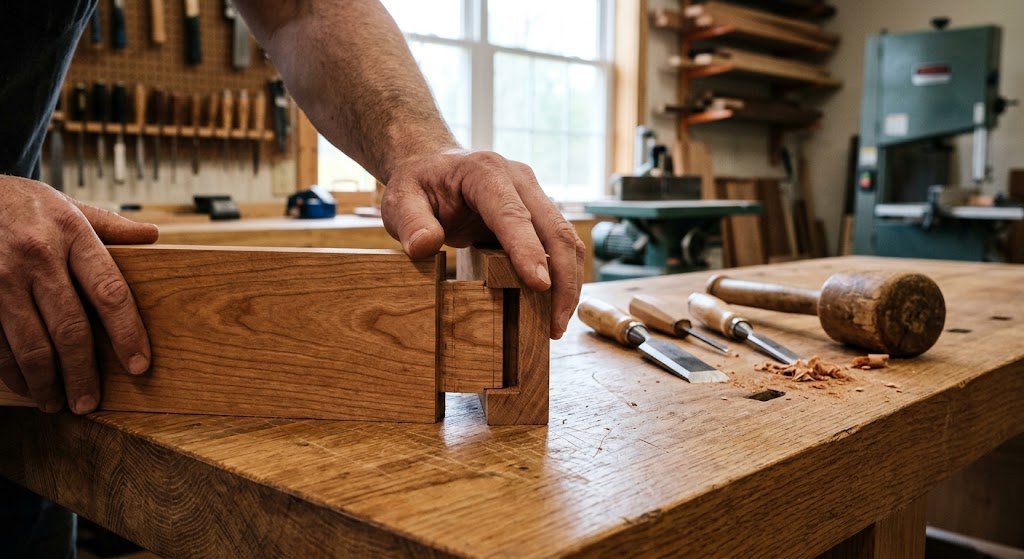
Dating back thousands of years, the mortise and tenon joint consists of a square or rectangular peg (the tenon) on the end of one board that fits precisely into a matching cavity (the mortise) cut into another.
Key Advantages:
- Unmatched Mechanical Strength: The interlocking wood geometry provides huge face-grain-to-face-grain glue surface area, making it virtually indestructible under dynamic weight loads.
- Heirloom Quality: Preferred for fine furniture, heavy dining tables, timber framing, and doors where structural longevity is the top priority.
Disadvantages:
- Time-Consuming Execution: Cutting tight-fitting tenons and clean mortises requires careful layout work, specialized router bits, mortising machines, or sharp hand chisels.
[External Link: Check Fine Woodworking’s technical structural testing data on joint strength and load capacity]
Wood Joinery Comparison: At a Glance
| Feature | Pocket Holes | Dowel Joints | Mortise & Tenon |
|---|---|---|---|
| Primary Strength | Moderate | High | Maximum / Heavy Duty |
| Execution Speed | Extremely Fast | Fast to Moderate | Slow / Precision-focused |
| Visibility | Visible (Requires Plugs) | 100% Hidden | 100% Hidden (or Decorative Through-Tenon) |
| Required Tools | Pocket Hole Jig & Driver Bit | Dowel Jig & Brads | Chisels, Router, or Mortiser |
| Best Used For | Cabinet Frames, Trim, DIY | Shelving, Chairs, Panels | Tables, Workbench Legs, Doors |
Frequently Asked Questions (FAQs)
Is a dowel joint stronger than a pocket hole joint?
Yes. Fluted hardwood dowels generally offer higher shear strength and greater glued surface area across the joint seam than pocket screws alone, especially in solid hardwood applications where screws can split dense fibers if not pre-drilled properly.
Do I still need wood glue when using pocket hole screws?
Absolutedly. Pocket hole screws hold the joint tight and act as an internal clamp, but PVA wood glue provides long-term structural adhesion across the mating faces.
What is the easiest way to cut a mortise and tenon joint without specialized machinery?
You can easily cut mortises using a standard plunge router with a straight bit combined with an edge guide, then square the corners with a sharp bench chisel. Tenons can be cut quickly on a table saw using a dado stack or a simple tenoning jig.
Conclusion
Having wood joinery explained in practical terms helps you select the right joint for every build without overcomplicating your workflow. Use pocket holes when speed and hidden pocket placements let you assemble projects rapidly; choose dowels when you need invisible, clean reinforcement for medium-duty furniture; and rely on classic mortise and tenon joints when building heavy, high-stress pieces meant to last for generations. Master these three core techniques, and you will tackle any woodworking project with total confidence!
Leave a Reply