Introduction
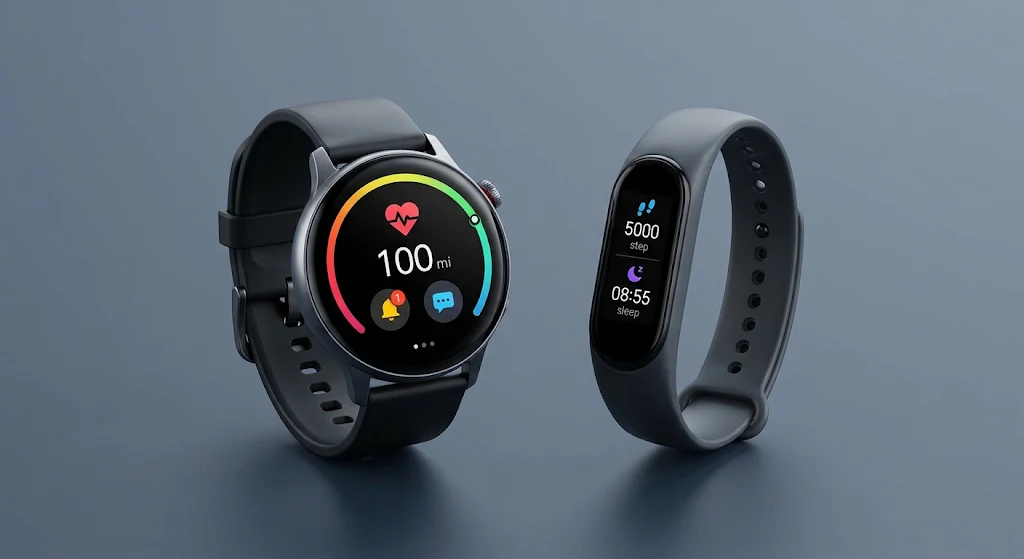
Choosing between a Smartwatch vs. Fitness Tracker used to be straightforward: one was a miniature computer for your wrist, and the other was a basic pedometer. Today, that line has blurred considerably. Modern fitness bands feature vibrant AMOLED screens and smartphone notifications, while flagship smartwatches pack medical-grade ECG sensors and advanced recovery analytics. Still, picking the wrong category can leave you frustrated by daily charging routines or missing out on essential workout metrics. Understanding the core differences in battery endurance, sensor accuracy, app ecosystems, and comfort will help you invest in the exact wearable your lifestyle demands https://fibozin.com.
Key Takeaways
- Smartwatches act as phone extensions: They excel at voice calls, replying to texts, contactless payments, turn-by-turn navigation, and third-party apps.
- Fitness trackers prioritize endurance and comfort: Slim bands typically weigh under 30 grams and deliver 7 to 14 days of battery life, making them effortless to wear during sleep.
- Health sensor accuracy is comparable for daily metrics: Both categories use multi-path optical heart rate sensors and SpO2 monitors that track resting heart rate, steps, and sleep stages accurately.
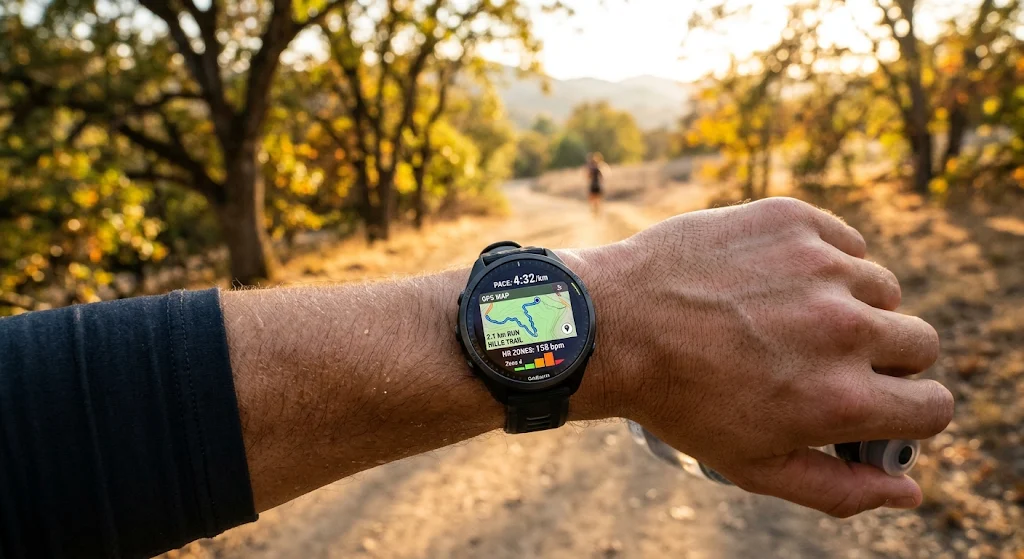
- Built-in GPS separates casual bands from training tools: Most budget fitness trackers rely on your phone’s GPS for outdoor routes, whereas smartwatches and sport watches include independent dual-band GPS.
- Price and subscriptions vary widely: Fitness trackers generally cost between $50 and $200, while flagship smartwatches range from $250 to over $800.
Core Differences: Smartwatch vs. Fitness Tracker at a Glance
Before diving into specific features, it helps to see how these two wearable categories stack up across everyday specs.
| Feature | Smartwatch | Fitness Tracker |
| Primary Focus | Productivity, connectivity, & comprehensive health | Activity tracking, sleep monitoring, & recovery |
| Average Battery Life | 1 to 3 days (up to 14 days on sport models) | 7 to 14+ days |
| Display & Design | Large square or round touchscreen; watch-like aesthetic | Slim, lightweight band; minimalist or screenless |
| Third-Party Apps | Full app stores (watchOS, Wear OS) | Closed system with manufacturer widgets only |
| Calls & Replies | Built-in mic/speaker for calls and full message replies | Read-only notifications or basic quick replies |
| Typical Price Range | $200 – $1,000+ | $50 – $200 |
1. Health & Fitness Tracking Accuracy
When comparing a Smartwatch vs. Fitness Tracker purely on biometric data, you might be surprised to learn that spending more does not always buy better step counting.
Heart Rate, SpO2, and Sleep Monitoring
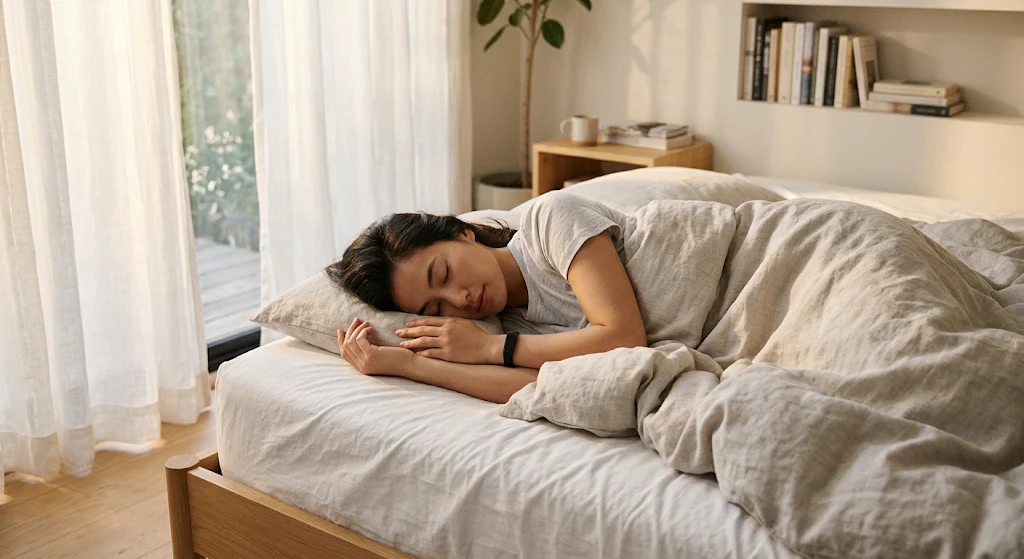
Both devices rely on photoplethysmography (PPG) optical sensors to measure blood flow through your wrist. For resting heart rate, daily step counts, blood oxygen saturation (SpO2), and overnight sleep tracking, a mid-range fitness tracker performs virtually identically to a flagship smartwatch. In fact, because fitness trackers are lighter and narrower, they stay flush against your skin during sleep without shifting, often resulting in cleaner overnight heart rate variability (HRV) readings.
Advanced Medical & Athletic Metrics
Where smartwatches pull ahead is specialized hardware. Flagship smartwatches frequently include FDA-cleared electrocardiogram (ECG) apps for detecting atrial fibrillation, irregular rhythm notifications, sleep apnea detection, and dual-frequency GPS (L1 + L5) for pinpoint accuracy when running beneath dense tree cover or tall city buildings. [External Link: Insert high-authority medical or tech study URL on wearable sensor accuracy here with anchor text “clinical studies on optical heart rate sensor accuracy”]
[Image Placeholder 1]
2. Battery Life and Charging Habits
Battery endurance is often the deciding factor in the Smartwatch vs. Fitness Tracker debate https://fibozin.com.
The Daily Charging Trade-Off
Full-featured smartwatches run complex operating systems with bright Always-On Displays, cellular radios, and background app syncing. Consequently, mainstream models like the Apple Watch or Samsung Galaxy Watch require charging every 24 to 48 hours. If you forget to top up your battery before bed, you miss an entire night of sleep and recovery data.
Multi-Week Freedom
Fitness trackers strip away power-hungry processors and open app stores in favor of ultra-efficient firmware. Most fitness bands run comfortably for 7 to 14 days on a single charge, even with continuous 24/7 heart rate and sleep monitoring turned on. If you hate adding another charger to your nightly routine or travel frequently without cables, a fitness tracker wins effortlessly.
3. Smart Features and Daily Convenience
Think about how much you want your wrist to interact with your smartphone throughout the workdayhttps://www.atlassian.com.
When a Smartwatch Shines
A smartwatch acts as a true digital assistant. You can answer phone calls directly from your wrist while carrying groceries, dictate text replies, tap to pay at checkout terminals via NFC, control smart home devices, and download offline Spotify playlists so you can leave your phone at home during workouts. [Internal Link: Insert relevant internal URL here with anchor text “best smartwatch apps for productivity and fitness”]
The Case for Digital Minimalism
While fitness trackers display incoming call alerts, calendar reminders, and text previews, they intentionally limit interaction. For many users, this is a major benefit rather than a flaw. A fitness tracker keeps you informed without pulling you into endless micro-interactions or notification fatigue.
[Image Placeholder 2]
4. Design, Comfort, and Durability
A health wearable only works if you actually wear it consistently.
- Smartwatch Aesthetics: Smartwatches look like traditional timepieces. With stainless steel or titanium cases, customizable watch faces, and interchangeable leather or metal bands, they transition seamlessly from a morning gym session to a formal business meeting. However, their 40mm to 49mm cases can feel bulky under tight shirt cuffs or while typing on a laptop.
- Fitness Tracker Ergonomics: Slim bands weigh a fraction of a smartwatch and hug the contour of your wrist. They rarely snag on gym equipment, kettlebells, or winter jackets, and they are practically unnoticeable when sleeping. Nearly all modern options in both categories feature 5 ATM or IP68 water resistance, making them completely safe for lap swimming and showering.
Which One Should You Buy?
Still undecided on Smartwatch vs. Fitness Tracker? Match your daily habits to the profiles below:
Buy a Smartwatch If:
- You want to leave your smartphone in your pocket or gym locker while still taking calls, streaming music, and using GPS.
- You rely on contactless wrist payments, voice assistants, and turn-by-turn navigation.
- You want a stylish timepiece that doubles as a professional accessory.
- You don’t mind charging your device daily or every other day.
Buy a Fitness Tracker If:
- Your main goal is tracking daily steps, workouts, resting heart rate, and sleep quality without distractions.
- You want 1 to 2 weeks of battery life so you never have to worry about nightly charging.
- You find large watch cases uncomfortable during sleep or weightlifting.
- You want maximum health-tracking value for under $150. [Internal Link: Insert relevant internal URL here with anchor text “top budget fitness trackers tested for accuracy”]
[Image Placeholder 3]
Conclusion
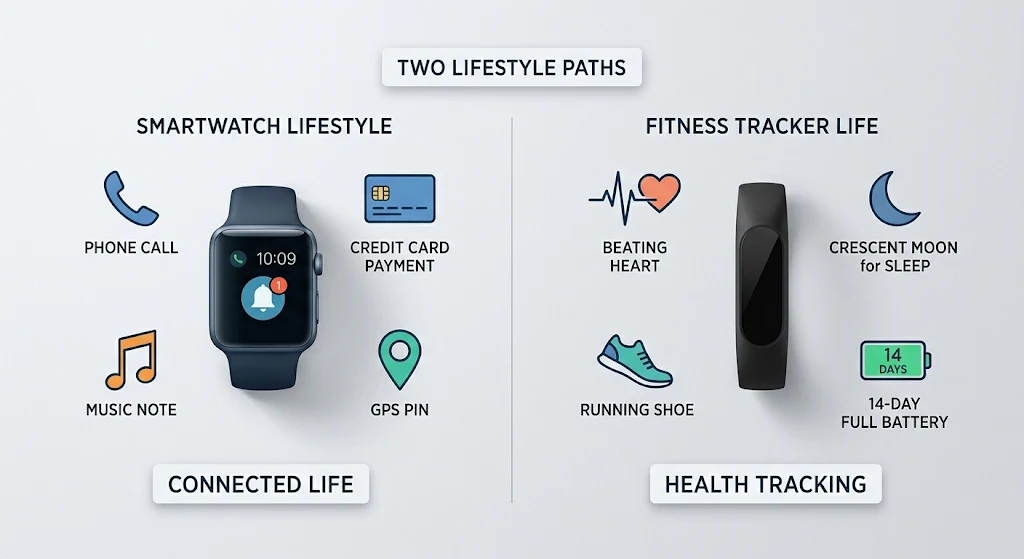
The right choice in the Smartwatch vs. Fitness Tracker matchup comes down to whether you want a connected lifestyle hub or a dedicated health monitor. If you love the convenience of wrist-based apps, voice replies, and built-in GPS—and can build a quick daily charging habit—a smartwatch delivers unmatched versatility. On the other hand, if you want effortless 24/7 biometric tracking, superior sleep comfort, and multi-week battery endurance at a fraction of the price, a fitness tracker will serve you far better.
Frequently Asked Questions (FAQs)
Is a fitness tracker more accurate than a smartwatch?
For basic metrics like step counting, resting heart rate, and sleep duration, both devices offer nearly identical accuracy because they use similar accelerometer and optical sensor technology. However, high-end smartwatches often feature superior multi-band GPS for outdoor running distance and FDA-cleared ECG sensors for heart rhythm analysis.
Can a fitness tracker work without a smartphone?
Yes, a fitness tracker can record steps, heart rate, workouts, and sleep independently for several days. However, you will need to pair it with a smartphone app initially for setup and sync it periodically to view detailed historical charts and trends.
Do you need a monthly subscription for a smartwatch or fitness tracker?
Most major smartwatches (such as Apple Watch and Samsung Galaxy Watch) and fitness trackers (like Garmin and Amazfit) include all core health and fitness metrics for free. Certain brands—such as Fitbit Premium or Whoop—offer optional or required paid memberships for deeper readiness scores, guided workouts, and long-term trend analysis.
Which wearable is better for tracking sleep?
A fitness tracker is generally better for sleep tracking. Its slim, lightweight profile is far more comfortable to wear overnight than a heavy smartwatch, and its multi-day battery life ensures you never have to take it off at bedtime to charge.
Leave a Reply