Introduction
Lighting accounts for a noticeable portion of the average household energy budget. When homeowners evaluate lighting upgrades, the primary debate always comes down to LED vs. traditional bulbs. For decades, incandescent and halogen bulbs were the default choice because of their low purchase price. However, with rising utility rates and advancements in solid-state lighting, the financial dynamics have shifted drastically https://fibozin.com.
Understanding the true financial and operational impact of LED vs. traditional bulbs helps you make an informed decision that cuts utility costs without sacrificing brightness or visual comfort. Let’s break down the numbers, lifespan, and real-world efficiency to see which option actually wins the savings race.
Key Takeaways
- Energy Efficiency: LEDs consume up to 80% to 90% less energy than traditional incandescent bulbs to produce the exact same amount of light (lumens).
- Longevity: A standard LED bulb lasts anywhere from 15,000 to 25,000 hours, outlasting traditional incandescent bulbs by roughly 20 times.
- Upfront vs. Long-Term Cost: While traditional bulbs are cheaper to buy initially, their frequent replacements and massive electricity draw make them significantly more expensive over time.
- Heat Dissipation: Traditional bulbs waste about 90% of their energy as heat, whereas LEDs run cool, reducing indoor cooling loads during warmer months.
- Return on Investment (ROI): The higher initial price of LEDs is typically recovered within the first few months of regular daily usage through lower utility bills.
The Core Differences: How Bulbs Generate Light
To understand why costs differ so sharply, it helps to look at the underlying technology of how these bulbs operate.
Incandescent and Halogen Basics
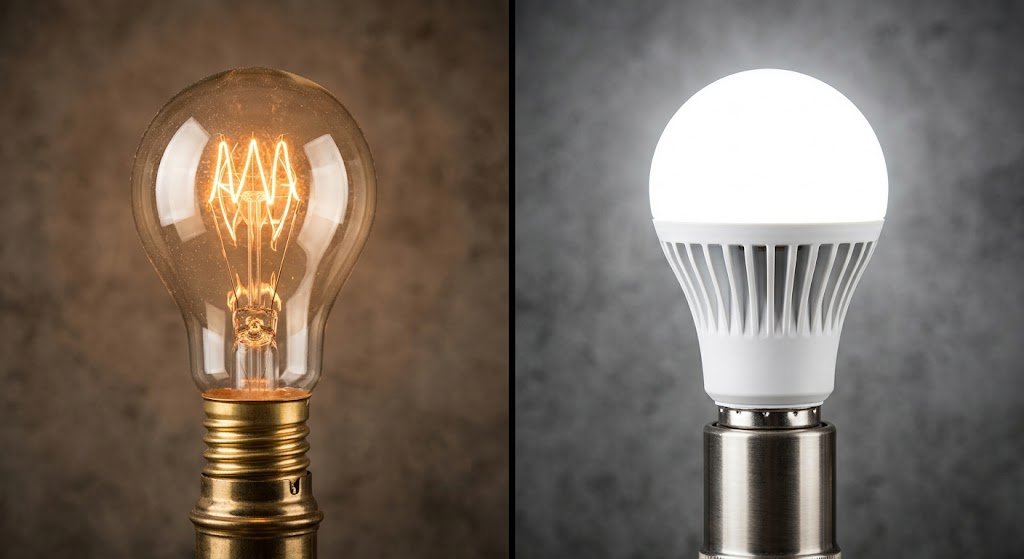
Traditional incandescent bulbs work by passing an electric current through a thin tungsten filament until it heats up and glows. The major flaw in this process is thermal inefficiency: roughly 90% of the energy consumed is released as heat rather than visible light. Halogen bulbs operate on a similar principle but use halogen gas to make the filament burn slightly hotter and brighter, though they still suffer from poor energy economy Wikipedia.
Light Emitting Diode (LED) Technology
LEDs (Light Emitting Diodes) use semiconductor electronics to move electrons through a material, releasing energy in the form of photons. This process generates almost no waste heat, turning nearly all incoming electrical current directly into illumination. This foundational efficiency forms the basis of why LED vs. traditional bulbs comparisons heavily favor modern solid-state options.
Breaking Down the Cost: Upfront Price vs. Long-Term Savings
When comparing prices at the hardware store, traditional bulbs appear attractive because they cost a fraction of a dollar. Conversely, quality LED bulbs can cost anywhere from $2 to $5 or more per unit. However, looking solely at retail price ignores the total cost of ownership.
| Metric | Traditional Incandescent (60W) | Modern LED Bulb (9W equivalent) |
| Average Purchase Price | $1.00 per bulb | $3.00 per bulb |
| Energy Consumption | 60 Watts | 9Watts |
| Average Lifespan | 1,000 Hours | 25,000 Hours |
| Bulbs Needed for 25,000 Hours | 25 bulbs ($25.00) | 1 bulb ($3.00) |
| Electricity Cost (at $0.15/kWh for 25k hrs) | $225.00 | $33.75 |
| Total Cost Over 25,000 Hours | $250.00 | $36.75 |
As the breakdown illustrates, choosing LEDs over traditional options yields massive net savings over the lifespan of the hardware.
[Image Placeholder 1]
Energy Efficiency and Lumens Over Watts
For generations, consumers judged bulb brightness by wattage. A higher wattage meant a brighter light—and a much higher electric bill. Today, the metric that matters is lumens, which measure actual light output.
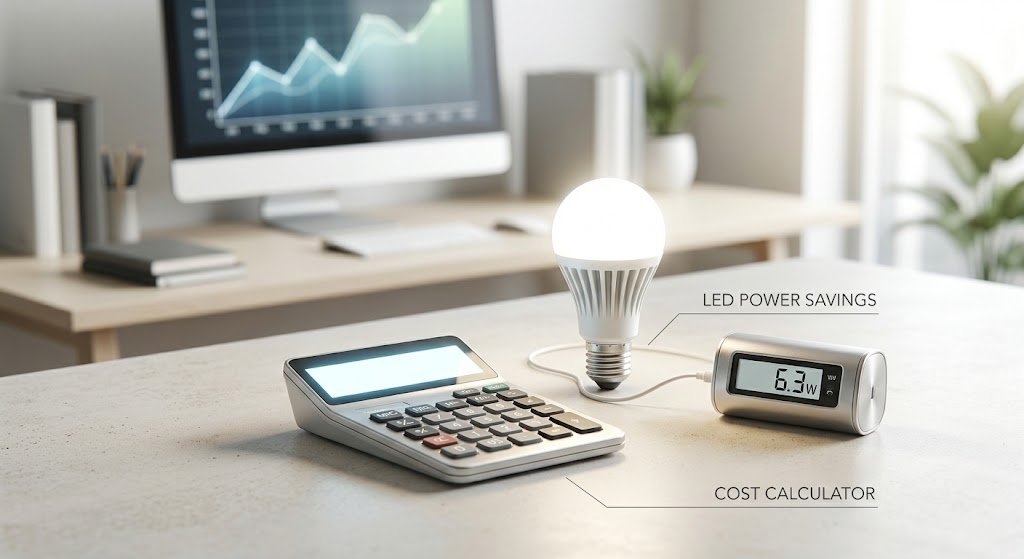
Because LEDs require far fewer watts to produce the same lumen output, your monthly electricity consumption drops dramatically. For example, replacing five 60-watt incandescent bulbs running three hours a day with 9-watt LED equivalents reduces hourly energy usage from 300 watts down to just 45 watts. Multiply that reduction across an entire home, and the cumulative savings on your monthly power statement become substantial.
Lifespan and Durability: How Often Are You Replacing Bulbs?
Frequency of replacement is another hidden financial drain associated with traditional lighting.
- Incandescent Burnout: Because the tungsten filament burns white-hot and experiences extreme thermal stress every time you flip a switch, traditional bulbs burn out quickly (typically within 1,000 to 1,200 hours).
- Solid-State Durability: LEDs have no fragile filaments to snap. They are housed in durable plastic or glass shells and feature integrated drivers that manage electrical fluctuations safely.
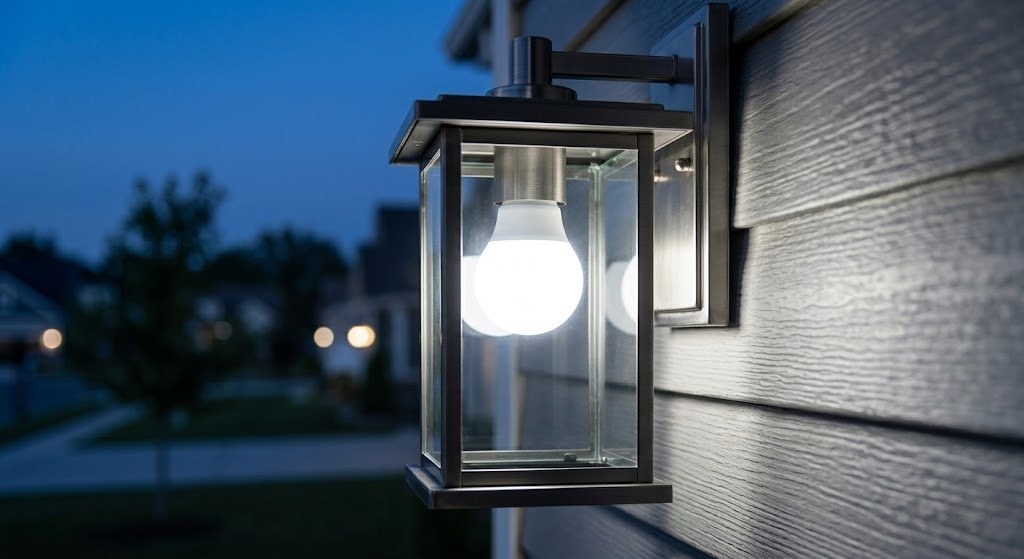
Because they last up to 25 times longer than incandescents, you eliminate the recurring hassle and expense of buying replacements every few months. This reliability makes LEDs particularly valuable for hard-to-reach ceiling fixtures, stairwells, and outdoor security lights.
To learn more about optimizing your entire household’s electrical and lighting setup, read our guide on [Internal Link: Insert relevant internal URL here with anchor text – smart lighting and home efficiency upgrades].
[Image Placeholder 2]
Environmental Impact and Hidden Costs
Beyond direct financial savings in your bank account, the debate over LED vs. traditional bulbs carries important environmental and resource implications:
- Carbon Footprint: Because power plants burn fossil fuels to generate electricity, using 80% less energy directly reduces your household’s carbon dioxide emissions.
- Waste Reduction: Throwing away dozens of burnt-out incandescent bulbs contributes significantly to household landfill waste over a span of several years.
- Hazardous Materials: Unlike older compact fluorescent lamps (CFLs), standard LEDs do not contain toxic mercury, making them safer to handle and easier to recycle.
Calculating Your Return on Investment (ROI)
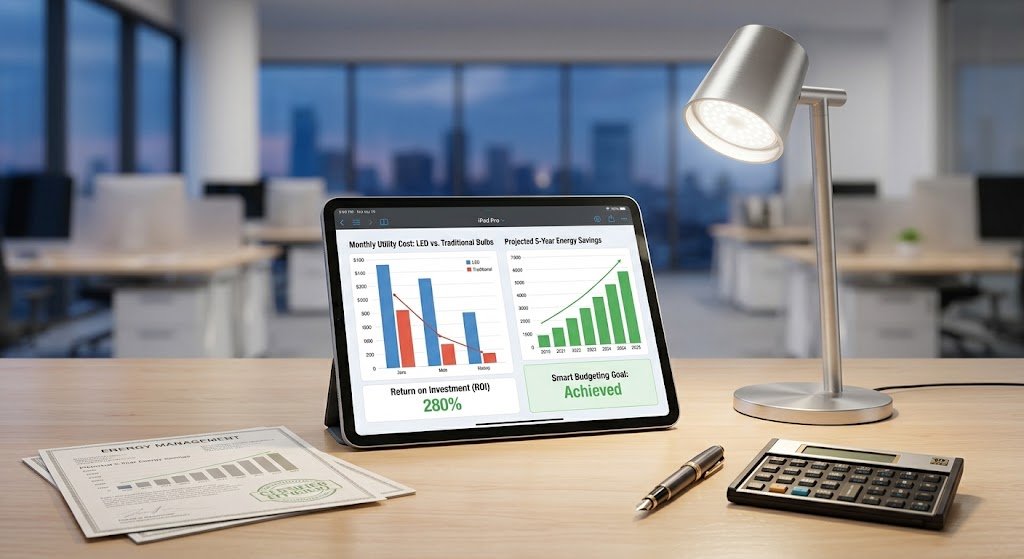
When weighing the choice between LED vs. traditional bulbs, calculating your payback period is straightforward. If an LED bulb costs $3 and saves you roughly $8 to $10 in electricity costs per year compared to an incandescent bulb used in a high-traffic room, your initial purchase investment is fully recovered in less than four months. Every month after that represents pure, unadulterated financial savings.
For comprehensive regulatory background on energy efficiency standards and appliance testing, you can reference official guidelines from the [External Link: Insert high-authority external URL here with anchor text – U.S. Department of Energy lighting efficiency standards].
[Image Placeholder 3]
Conclusion
When evaluating LED vs. traditional bulbs, the data is definitive: while traditional bulbs offer a lower initial purchase price, they are vastly more expensive to operate, require frequent replacement, and waste excessive amounts of energy as heat. Upgrading your home to energy-efficient LEDs yields immediate reductions in your monthly utility bills, provides superior illumination, and delivers an exceptional return on investment. Make the switch today and start keeping more of your hard-earned money where it belongs.
Frequently Asked Questions (FAQs)
Are LED bulbs really cheaper than traditional incandescent bulbs?
Yes. Although LED bulbs cost slightly more upfront, their exceptionally low energy consumption and 25-fold longer lifespan save the average household significant money on electricity and replacement costs over time.
Do LED bulbs produce less heat than traditional bulbs?
Yes. Traditional incandescent bulbs convert about 90% of their energy into heat, making them hot to the touch. LEDs emit almost no thermal radiation from the light surface, keeping rooms cooler and reducing air conditioning loads.
Can I use LED bulbs in old light fixtures designed for incandescent bulbs?
In most cases, yes. As long as the physical base type (such as standard E26 screw bases) matches your fixture, LED bulbs fit seamlessly into older lamps and recessed cans without requiring rewiring.
How do I choose the right brightness when replacing old bulbs with LEDs?
Instead of looking at wattage, look at lumens on the packaging. To replace a traditional 60-watt incandescent bulb, look for an LED bulb that produces approximately 800 lumens of light output.
Leave a Reply