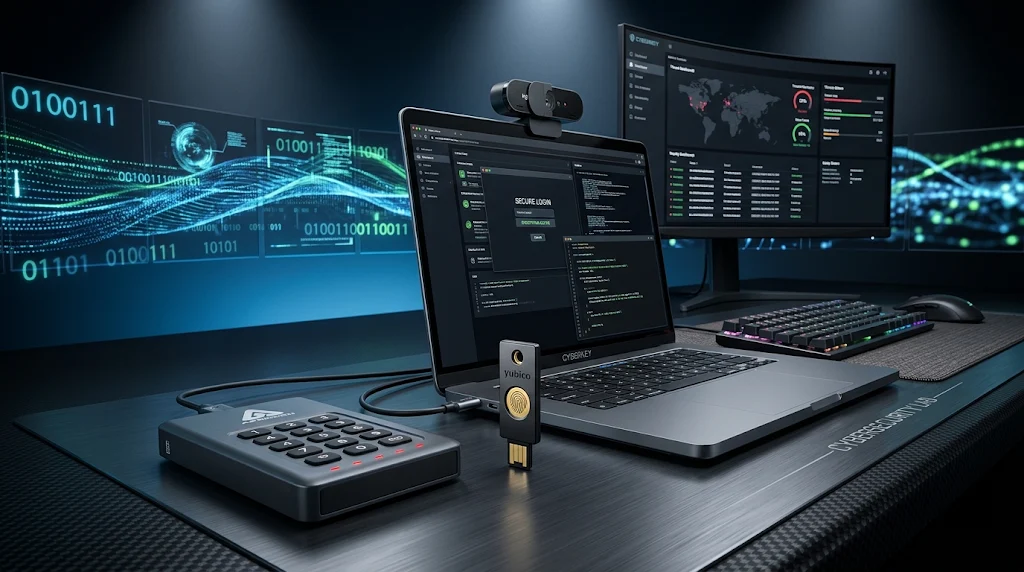
Introduction: Why Physical Security Matters in a Digital World
As cyber threats evolve into increasingly automated and AI-driven vectors, relying exclusively on software passwords is no longer enough to defend your personal data. Incorporating specialized cybersecurity gadgets alongside defensive digital routines builds an impenetrable physical barrier between your personal information and malicious actors.
Whether you work remotely from coffee shops or simply want to protect your home network from unauthorized intrusions, pairing specialized hardware with tactical habits creates a multi-layered security posture that shields your accounts against sophisticated breaches https://fibozin.com.
Key Takeaways: Most Important Points
- Phishing-Proof Authentication: Hardware security keys provide cryptographically backed FIDO2 authentication that software codes cannot replicate.
- Encrypted Storage Boundaries: AES-256 hardware-encrypted drives ensure off-site physical backups remain unreadable even if lost or stolen.
- Public Wi-Fi Safeguards: Pairing hardware data blockers with a VPN prevents juice-jacking and network snooping while traveling.
- Daily Digital Hygiene: Implementing password managers, passkeys, and biometric locks eliminates weak security links.
1. Top Cybersecurity Gadgets to Lock Down Your Hardware
[Image Placeholder 1]
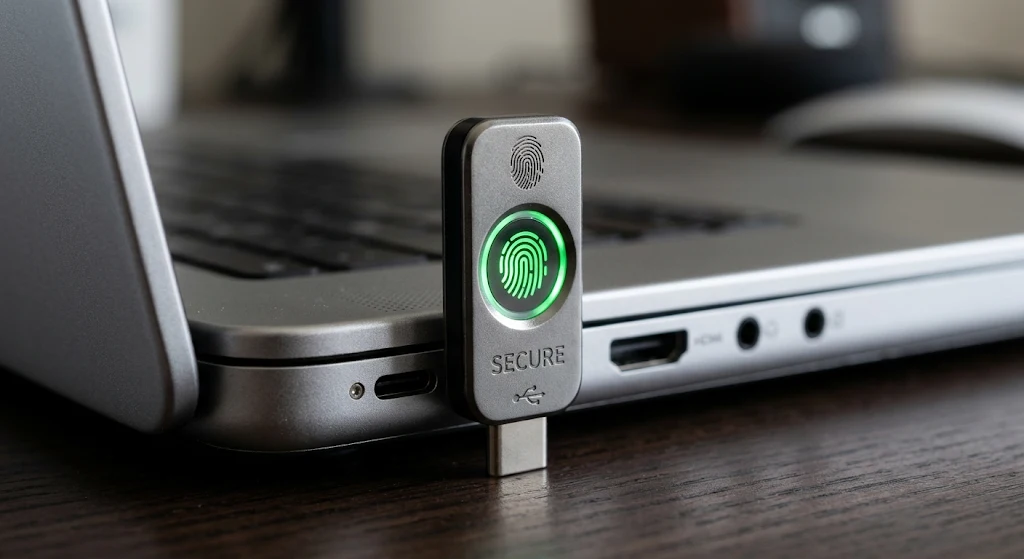
Hardware Security Keys (FIDO2 & Passkeys)
Hardware security keys—such as the YubiKey 5 Series or Google Titan—represent the single strongest defense against modern account takeover attacks. Utilizing FIDO2 and WebAuthn standards, these pocket-sized USB and NFC keys replace traditional SMS two-factor authentication https://fibozin.com.
Because the cryptographic token checks the domain origin during login, hardware keys completely resist man-in-the-middle phishing attempts.
- Key Benefit: Stops credential harvesting instantly, even if an attacker knows your password.
- Best Practice: Register two security keys—a primary key for daily use and a backup key stored in a secure home location.
Hardware-Encrypted Drives
Standard external hard drives leave your files exposed if stolen. Hardware-encrypted drives feature physical keypads or integrated biometric scanners that execute real-time AES-256 bit encryption directly on the drive controller, isolating decryption keys from system malware.
[Internal Link: Read our comprehensive guide on secure cloud vs offline backup strategies]
2. Shielding Your Physical and Network Environment
[Image Placeholder 2]
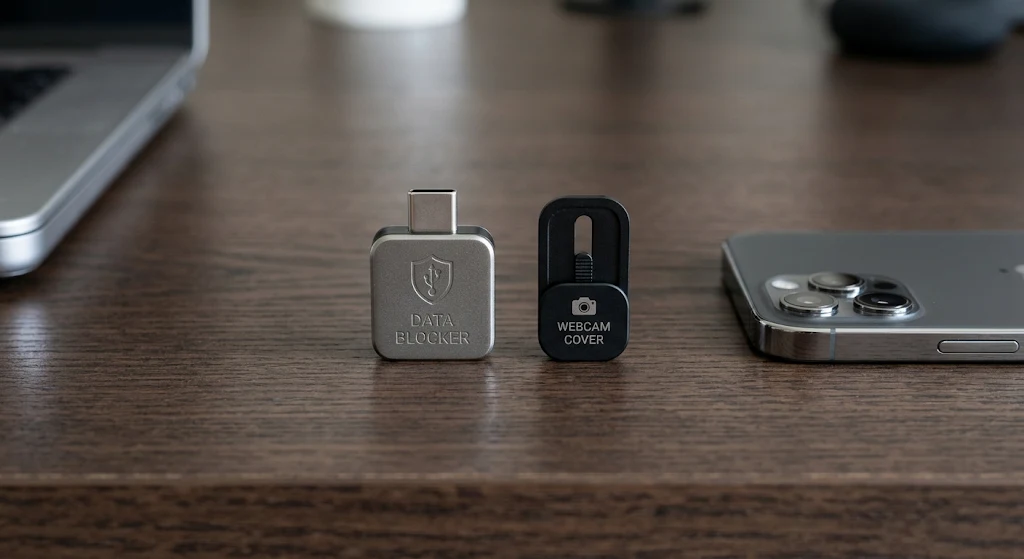
USB Data Blockers (“USB Condoms”)
When charging your devices at airport stations, hotels, or public hubs, malicious ports can execute “juice-jacking”—transferring malware or extracting data while your phone charges. A physical USB data blocker physically severs the data transfer pins inside the adapter, allowing power to pass while completely blocking data lines https://www.atlassian.com.
Privacy Covers and RFID Blockers
Low-cost physical safeguards yield high security returns:
- Webcam Covers: Physical sliding shutters prevent remote ratting and camera hijackings.
- Faraday Bags & RFID Sleeves: Signal-blocking pouches isolate contactless credit cards, keyless entry fobs, and mobile devices from rogue wireless scanners.
[External Link: Learn more about cybersecurity infrastructure standards from the Cybersecurity and Infrastructure Security Agency (CISA)]
3. Crucial Habits to Pair With Your Cybersecurity Gadgets
[Image Placeholder 3]
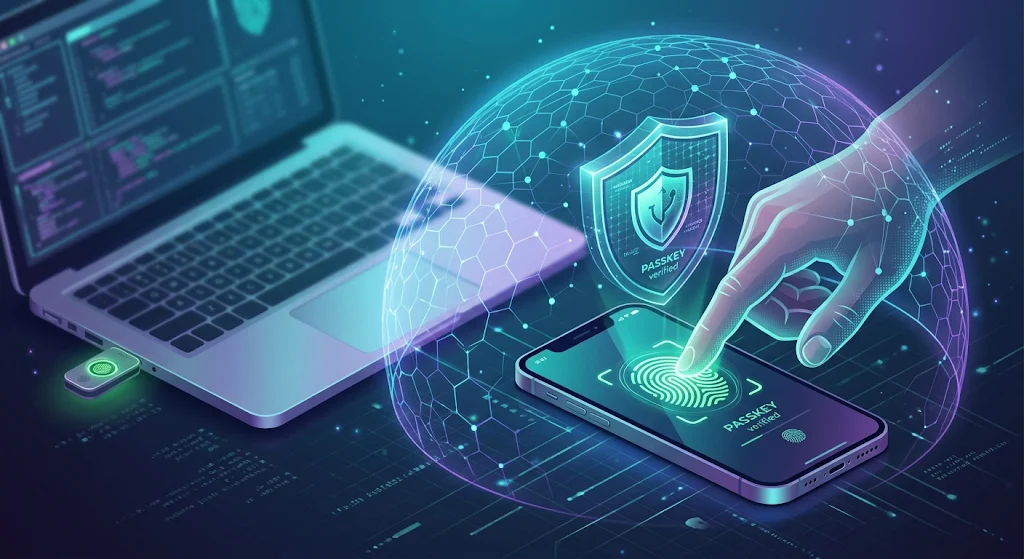
Relying solely on physical cybersecurity gadgets is incomplete without solid habits. True digital privacy requires blending reliable hardware with consistent security practices:
Adopt Password Managers and Passkeys
Stop re-using weak passwords across multiple platforms. Utilize end-to-end encrypted password managers to generate 16+ character complex passphrases. Transition accounts toward FIDO2 passkeys, which use device-bound public-key cryptography to eliminate shared passwords entirely.
Keep System Firmware and Software Updated
Unpatched vulnerabilities are prime entry points for exploits. Turn on automatic OS and browser updates across all laptops, phones, and IoT hardware to patch zero-day flaws immediately.
Conclusion
Building a robust digital defense does not require an engineering degree; it requires intent. By combining specialized cybersecurity gadgets—like FIDO2 hardware keys, USB data blockers, and encrypted storage—with consistent habits like passkey adoption and automatic updates, you turn potential network breaches into dead ends. Evaluate your threat exposure today, upgrade your essential hardware tools, and take direct control of your personal privacy.
Frequently Asked Questions (FAQs)
What are the most essential cybersecurity gadgets for beginners?
The most vital entry-level cybersecurity gadgets include a USB/NFC hardware security key (such as a YubiKey or Titan Key) for phishing-resistant logins, a physical webcam privacy cover, and a USB data blocker for public charging stations.
Are hardware security keys better than authenticator apps?
Yes. While authenticator apps are significantly safer than SMS codes, hardware security keys provide cryptographically bound origin checking. This means even if you land on a sophisticated fake login page, the hardware key will refuse to authenticate, neutralizing the attack.
How do USB data blockers protect my smartphone?
A USB data blocker contains no data connections inside its housing. It physically cuts the pin connections responsible for transmitting data over USB cords, ensuring only power lines connect to public charging outlets.
Leave a Reply