Creative Accent Lighting Ideas to Make Any Small Space Feel Bigger
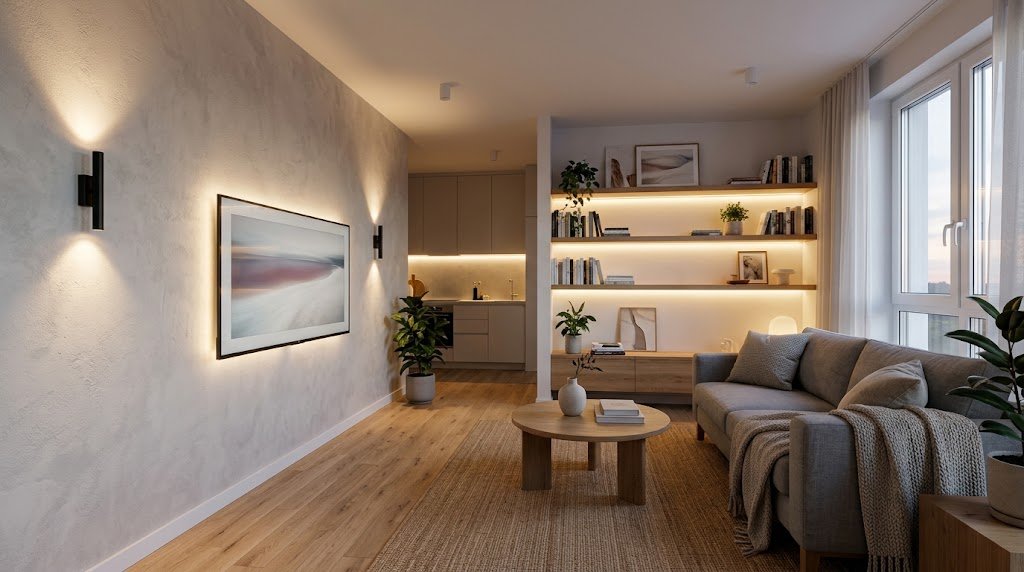
Living in a compact space doesn’t mean you have to feel boxed in. While painting walls in light shades and hanging mirrors are classic tricks to maximize room dimension, lighting is often the most underrated design tool available. Strategic Accent Lighting Ideas to Make Any Small Space Feel Bigger can visually push back walls, elevate ceiling heights, and create a sense of depth that makes cozy rooms feel expansive and inviting https://fibozin.com.
Instead of relying on a single overhead bulb—which creates harsh shadows and flattens out a room’s physical dimension—layered accent lighting guides the eye across different architectural planes. In this guide, we will explore creative, actionable accent lighting techniques designed to open up your living space without taking up valuable floor real estate.
Key Takeaways
- Layer Your Light: Avoid single, central ceiling fixtures; layering ambient, task, and accent lighting builds depth and visual interest.
- Eliminate Dark Corners: Illuminating neglected corners with uplights or corner fixtures visually expands the perimeter of a room.
- Draw the Eye Upward: Vertical wall sconces and tall floor uplights create vertical lines that make low ceilings appear much higher.
- Use Under-Cabinet & Floating LED Strips: Backlighting furniture and floating shelves makes heavy pieces look weightless and pushes back wall boundaries.
- Choose Smart & Dimmable Fixtures: Adjusting color temperatures and brightness levels allows you to adapt room dimensions dynamically based on time of day.
1. Use LED Strip Lights to Backlight Floating Furniture
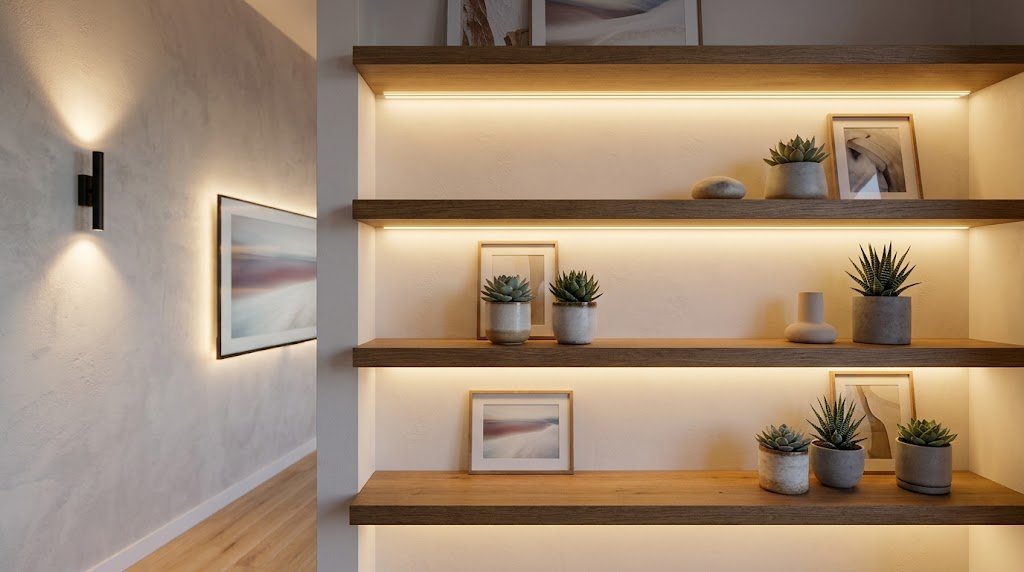
One of the most effective ways to use accent lighting for small spaces is through concealed LED strips. When applied behind floating shelving, headboards, or television units, backlighting creates a soft perimeter glow that tricks the eye into perceiving more depth.
By illuminating the wall directly behind a piece of furniture, you separate the furniture visually from the surface it attaches to. This “floating” effect breaks up harsh shadows and softens room edges, instantly making small living rooms or bedrooms feel more open.
- Under-Shelf Glow: Install low-voltage LED channel strips under floating shelves to highlight decor while illuminating dark wall sections.
- TV & Media Backlighting: Place smart bias lighting behind your display screen to reduce eye strain while adding a sophisticated multi-dimensional glow to the main wall.
[Internal Link: Discover our complete guide to smart home entertainment setups and bias lighting techniques.]
2. Install Vertical Wall Sconces to Heighten Low Ceilings
When horizontal floor space is limited, the key to visual expansion is emphasizing vertical height. Standard table lamps require end tables, taking up floor space and cluttering sightlines. Wall-mounted sconces eliminate footprint clutter while drawing the eye vertically toward the ceiling.
To maximize this effect, opt for up-and-down light sconces (bi-directional fixtures). These cast light both upwards toward the ceiling line and downwards along the wall surface.
Recommended Sconce Placement Strategies:
- Flanking Beds & Mirrors: Mount sleek sconces on either side of a bed or vanity mirror to widen wall surfaces.
- Hallway Accents: Space bi-directional sconces along narrow corridors to break up monotonous stretches of wall.
- Corner Heights: Place an uplighting wall sconce high up in a dark room corner to lift low ceilings https://www.atlassian.com.
[External Link: Read the Architectural Digest guide on standard interior lighting fixture placement rules.]
3. Brighten Forgotten Corners with Low-Profile Uplights
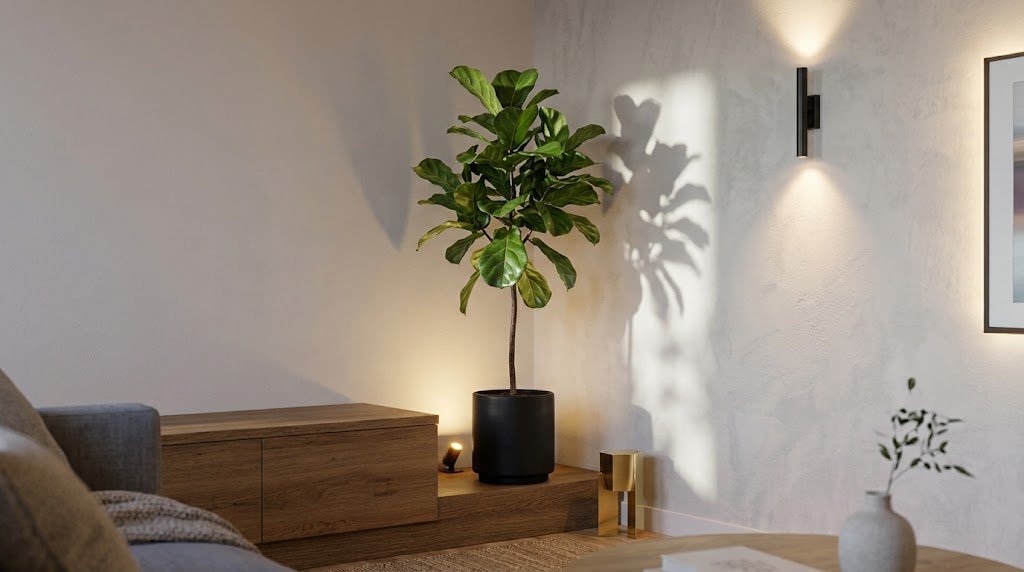
Dark, shadowy corners shrink a room’s perceived footprint by pulling the boundaries inward. By actively casting light into these dead zones with compact uplights, you effectively extend the visual boundaries of your room.
Miniature canister uplights or slim floor puck lights placed behind indoor plants, armchairs, or decorative urns push light upward along the corner seams. This technique highlights architectural texture while creating dramatic shadow silhouettes that add depth.
[Image Placeholder 2]
4. Inset LED Channels into Baseboards and Architectural Trims
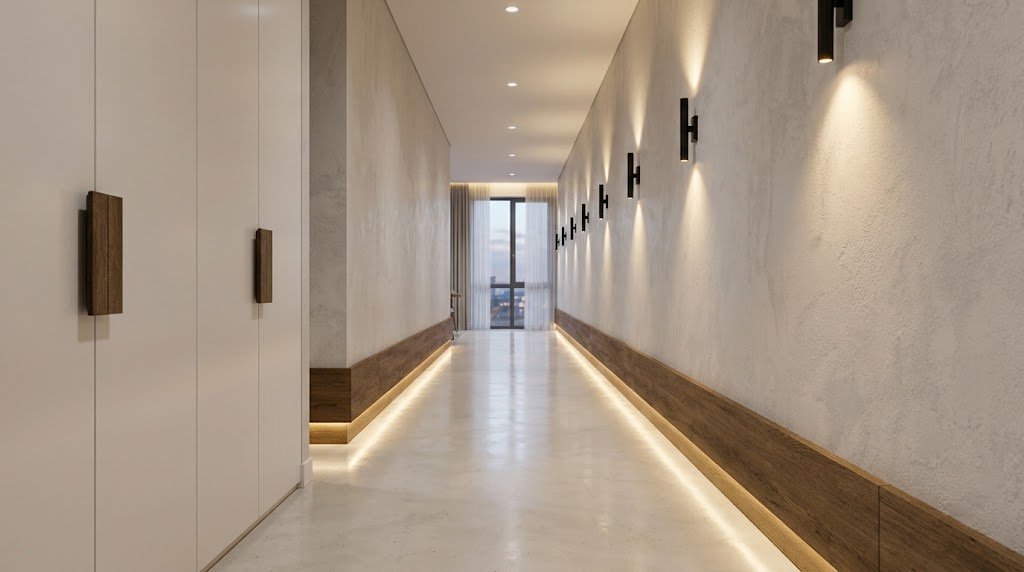
For a cutting-edge interior design aesthetic, recessed baseboard lighting provides a continuous line of sight along the floor boundary. Accent lighting for small spaces works best when light traces lines of architectural movement.
When baseboards or kick-plates (such as those under kitchen cabinetry) are illuminated with diffused neon-flex or aluminum LED channels, the floor appears to extend underneath cabinets and walls rather than abruptly stopping.
Quick Baseboard & Toe-Kick Lighting Tips:
- Kitchen Toe-Kicks: Apply diffusers under lower kitchen cabinets to make small galley kitchens look wider.
- Staircase Steps: Recess soft accent lighting into stair risers for ambient safety and modern flair.
- Warm Color Temperatures: Stick between 2700K and 3000K for a cozy, residential glow that relaxes the eyes.
[Image Placeholder 3]
5. Harness Smart Dimmable Accent Lighting for Dynamic Visual Depth
Fixed, overly bright overhead lighting flattens a room’s interior features. Incorporating smart home control into your accent lighting strategy allows you to adjust light levels, hue warmth, and contrast dynamically depending on the time of day or activity.
By dimming main ambient lights and keeping targeted accent lights at medium intensity, you create zones of light and shadow. This contrast tricks the brain into perceiving multiple focal points, giving the illusion of a much larger space.
- Automated Routines: Program accent lights to shift from energetic cool whites during daytime work hours to warm, dim tones in the evening.
- Zone Differentiation: Group your accent lights by area (e.g., bookshelf zone, art zone, seating zone) to define distinct function areas within a single small room.
Frequently Asked Questions
What color light makes a small room look bigger?
Warm to neutral white light (2700K to 3500K) works best for small spaces. Soft white tones bounce off walls cleanly without feeling cold or clinical, creating an open, airy ambience while maintaining warmth.
How can accent lighting for small spaces replace heavy lamps?
Instead of traditional floor or table lamps that take up physical floor footprint, use wall-mounted sconces, plug-in wall lights, or low-profile LED strips under shelves and behind furniture.
Can smart lighting strips be installed in small rental apartments?
Yes! Many flexible LED light strips utilize safe adhesive backings or low-profile aluminum tracks mounted with removable Command strips, making them completely renter-friendly and temporary.
Conclusion
Maximizing a compact living area doesn’t require knocking down walls or undergoing major renovations. By shifting your approach toward layered accent lighting for small spaces, you can dramatically alter how light interacts with room proportions.
Whether you opt for hidden under-shelf LED strips, vertical wall sconces, or strategic corner uplights, distributing light evenly along walls and vertical surfaces pushes boundaries outward and creates a spacious, modern home environment.
Leave a Reply