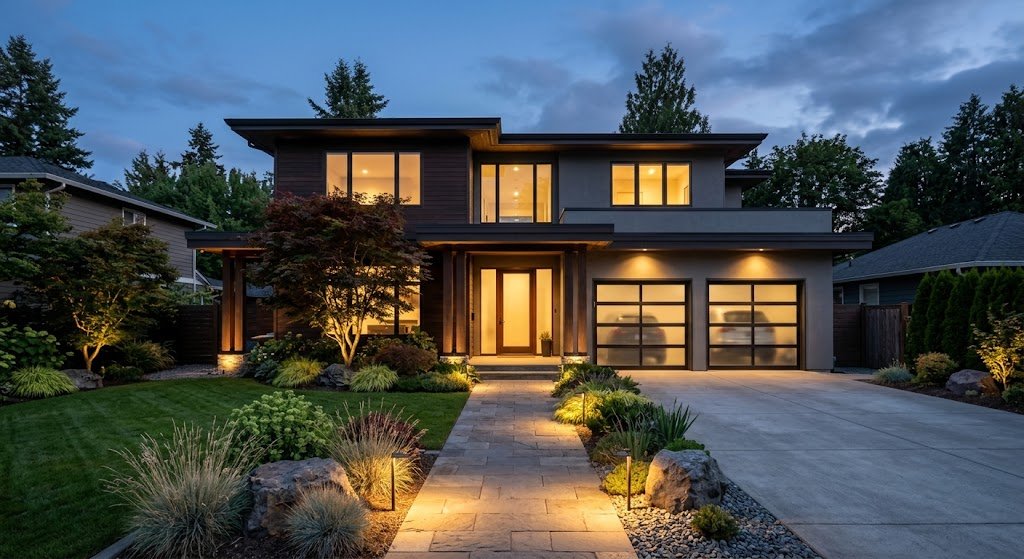
Outdoor lighting does far more than simply illuminate the dark after sunset. When designed thoughtfully, a comprehensive exterior lighting plan transforms your property, highlighting key architectural features, elevating landscape aesthetics, and providing robust safety for your family and guests. Whether you want to turn your backyard into an inviting night oasis or deter potential intruders with strategic security lights, this comprehensive outdoor lighting guide covers everything you need to know to achieve the perfect balance of form and function https://fibozin.com.
Key Takeaways
- Layer Your Lighting: Combine ambient, task, and accent lighting to create depth, safety, and visual interest across your property.
- Prioritize Low-Voltage LED: Modern 12V LED systems save up to 80% on energy costs, last longer, and are far safer for outdoor DIY and professional installations.
- Balance Aesthetics & Security: Smart placement around walkways, entry points, and dark corners boosts both curb appeal and home protection simultaneously.
- Embrace Smart Control: Timers, motion sensors, and smart home automation allow seamless energy management and customized night scenes.
The Core Layers of Landscape & Exterior Lighting
To build an effective lighting strategy, you must treat your exterior spaces with the same interior design principles used inside your home. Layering light prevents harsh glares, eliminates shadow pockets, and creates an inviting ambiance.
       ┌────────────────────────────────────────────────────────┐
       │                LAYERED LIGHTING SCHEME                 │
       └────────────────────────────────────────────────────────┘
            │                      │                       │
   ┌────────┴────────┐    ┌────────┴────────┐     ┌────────┴────────┐
   │ AMBIENT LIGHT   │    │   TASK LIGHT    │     │  ACCENT LIGHT   │
   ├─────────────────┤    ├─────────────────┤     ├─────────────────┤
   │ Wall Sconces    │    │ Pathway Lights  │     │ Uplights        │
   │ Post Lights     │    │ Step Lights     │     │ Well Lights     │
   │ Hanging Lanterns│    │ Floodlights     │     │ Spotlight Trees │
   └─────────────────┘    └─────────────────┘     └─────────────────┘
1. Ambient Lighting (General Illumination)
Ambient light provides overall illumination for an area, allowing people to move around comfortably and safely.
- Key Fixtures: Wall sconces, post lights, and hanging porch lanterns.
- Best Use: Entryways, patios, outdoor kitchens, and covered decks.
2. Task Lighting (Functional Safety)
Task lighting illuminates specific work or travel areas where clear visibility is critical for safety and activity.
- Key Fixtures: Path lights, step/deck lights, motion-activated floodlights, and barbecue grill lights.
- Best Use: Pathways, stairways, driveway borders, and cooking stations.
3. Accent Lighting (Visual Drama & Curb Appeal)
Accent light creates focus points by drawing attention to architectural features, trees, water fountains, or garden beds.
- Key Fixtures: Directional spotlights, well lights, and narrow-beam uplights.
- Best Use: Highlighting brick textures, stone columns, specimen trees, and garden statues.
[Image Placeholder 1]
How to Boost Curb Appeal with Strategic Lighting
First impressions matter. A well-lit home facade instantly increases perceived property value while making your home feel welcoming.
Highlighting Architecture & Landscaping
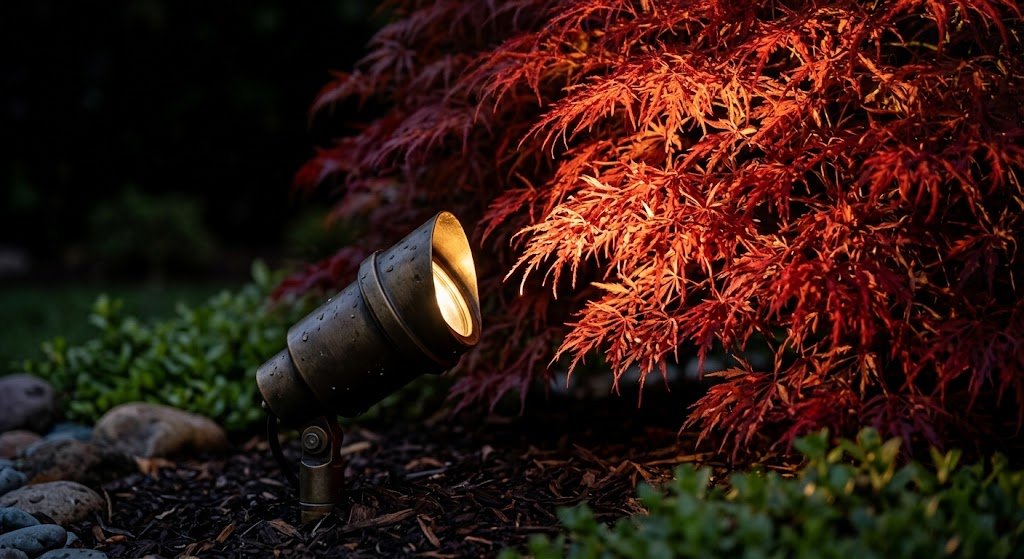
- Uplighting Trees: Place spotlights at the base of tall trees aimed upward into the branch canopy. For deciduous trees, this creates intricate shadow patterns; for evergreens, it adds rich color depth.
- Wall-Washing: Position fixtures close to stone or brick walls to cast a soft, even glow that emphasizes structural textures.
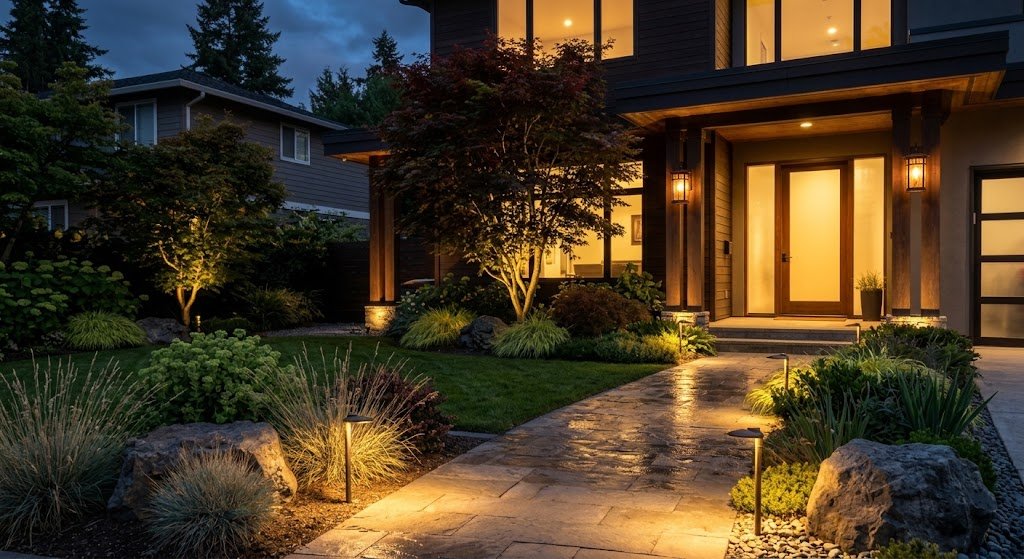
- Pathways & Borders: Stagger path lights along walkways instead of lining them up in straight, parallel rows (which can resemble an airport runway). Staggering creates a natural, flowing guide through your landscape.
Pro Tip: Always choose fixtures with warm color temperatures—between 2700K and 3000K (Warm White). Cooler white temperatures (4000K+) can look clinical, harsh, and uninviting on residential properties.
[Image Placeholder 2]
Maximizing Home Security with Exterior Illumination
A bright home is one of the single best deterrents against trespassers and burglars. However, security lighting does not mean blinding floodlights that wash out your yard and annoy your neighbors https://www.atlassian.com.
Strategic Placement for Maximum Protection
- Entry Points: Install sturdy wall sconces on either side of doors and garage entrances. Ensure there are no deep shadows around lock handles.
- Dark Corners & Side Yards: Position motion-sensor floodlights higher up near eaves or roof corners to cover side alleys and blind spots.
- Smart Integration: Connect your security lights to smart home ecosystems like Google Home, Alexa, or Home Assistant. [Internal Link: Insert relevant internal URL here with anchor text: “Explore our guide on integrating smart home security devices”].
Motion Sensors vs. Dusk-to-Dawn Control
- Dusk-to-Dawn Sensors: Automatically turn low-wattage accent or ambient lights on when the sun sets and off when it rises. This ensures your home is never pitch-black when you return late.
- Motion Sensors: Ideal for high-intensity floodlights. They save energy by turning on only when movement is detected, surprising potential intruders.
Technical Considerations: Voltage, IP Ratings, and Energy Efficiency
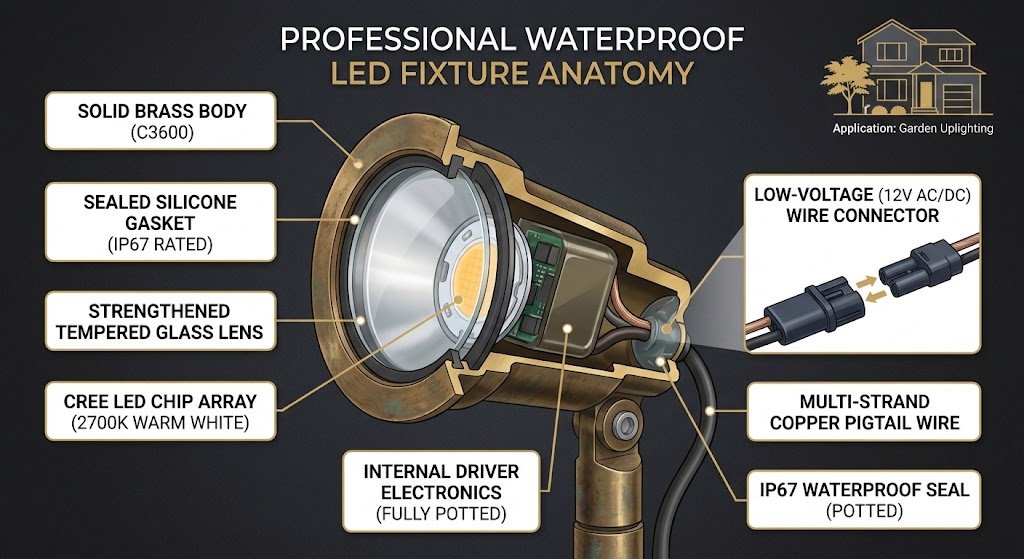
Selecting the right fixtures and wiring setup ensures longevity in harsh weather conditions.
| Parameter | Low Voltage (12V) | Line Voltage (120V) |
| Best For | Garden paths, trees, general landscape beds | High-powered floodlights, post lights, security |
| Safety | High (safe around pets/water) | Requires conduit & deeper trenching |
| Installation | DIY-friendly with transfromer | Often requires licensed electrician |
| Energy Consumption | Very Low (LED compatible) | Moderate to High |
Understanding IP Weatherproof Ratings
When purchasing outdoor fixtures, check their Ingress Protection (IP) rating:
- IP44: Protected against splashing water; ideal for sheltered porch sconces.
- IP65: Protected against water jets; suitable for open landscape lights and garden spots.
- IP67/IP68: Submersible; required for pond or fountain underwater lights.
For deeper technical standards on outdoor electrical installations, review the guidelines provided by the [External Link: Insert high-authority external URL here with anchor text: “National Electrical Contractors Association (NECA)”].
[Image Placeholder 3]
Frequently Asked Questions (FAQs)
What is the recommended wattage for outdoor landscape lighting?
With modern LED technology, look at lumens rather than watts. For path lights, 100 to 200 lumens (approx. 1.5–3 watts LED) is ideal. For tree uplighting or security spotlights, aim for 300 to 700 lumens (approx. 4–8 watts LED).
Should I choose solar lights or hardwired low-voltage lights?
While solar lights are easy to install, they rely heavily on direct sunlight and often produce dimmer light with shorter run times during winter. Hardwired low-voltage (12V) systems provide reliable, bright illumination year-round regardless of weather conditions.
How do I prevent glare from outdoor fixtures?
Use fixtures equipped with glare shields, cowls, or frosted lenses. Position spotlights so the beam aims away from direct viewing angles, such as windows, patios, or neighboring properties.
Conclusion
A well-executed exterior lighting plan seamlessly merges beauty and security. By following this outdoor lighting guide, layering ambient, task, and accent fixtures, choosing energy-efficient LED technology, and automating controls, you can transform your property’s nighttime appearance while keeping your home and family safe. Start small with key pathways and entryways, then build out your landscape design over time to create an outdoor space you can enjoy around the clock.
Leave a Reply