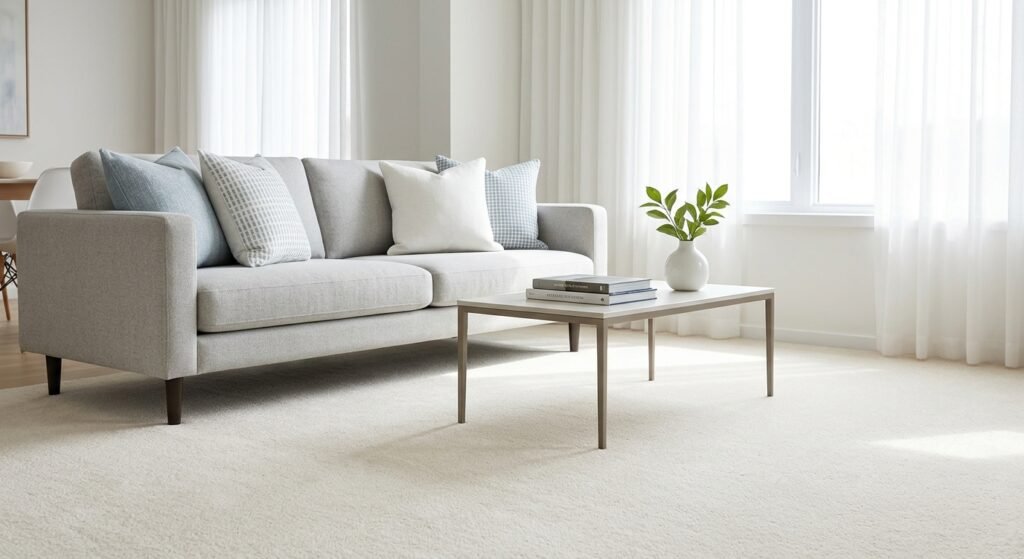
Knowing how to sanitize soft surfaces effectively is essential for maintaining a healthy, allergen-free indoor environment. Hard surfaces like granite, tile, and stainless steel can be disinfected quickly with liquid sprays, but porous fabrics—such as carpets, mattresses, sofa upholstery, and drapes—trap moisture, dust, pet dander, and microscopic pathogens deep within their fibers https://fibozin.com.
Improper cleaning methods often lead to fiber discoloration, water stains, or lingering dampness that encourages mold growth. By employing gentle yet effective steam cleaning methods, fabric-safe EPA-registered disinfectants, and natural deodorizing solutions, you can thoroughly protect your home’s soft furnishings while preserving their texture and color.
Key Takeaways
- Vacuum Before Sanitizing: Always use a HEPA-filter vacuum first to remove dry surface dirt, hair, and dust before applying any liquid or steam treatments.
- Harness High-Temperature Steam: Vapor steam cleaning above 175°F (80°C) neutralizes bacteria, dust mites, and bed bugs on porous fabrics without harsh chemicals.
- Check Fabric Cleaning Codes: Always check furniture care tags (W, S, WS, or X) prior to applying water-based or solvent cleaners to upholstery.
- Ensure Adequate Drying: Maximize airflow using fans and dehumidifiers after treatment to prevent mildew formation in carpet padding and mattress cores.
1. Preparing Soft Surfaces for Deep Sanitization
Attempting to sanitize soft surfaces without removing dry debris first turns surface dust into mud, driving grime deeper into carpet backing and upholstery cushions.
Thorough HEPA Vacuuming
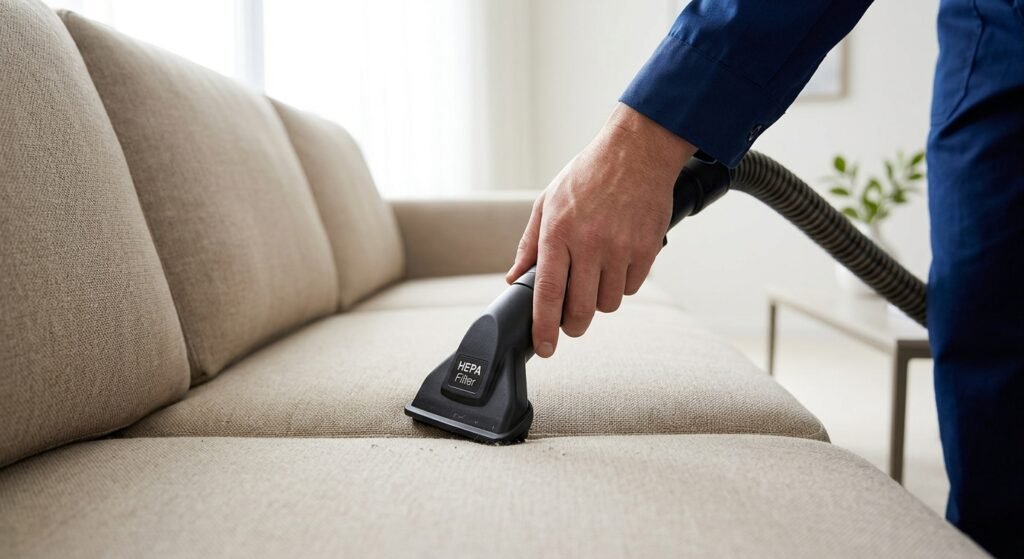
Slowly vacuum all fabric zones using overlapping passes. Use crevice attachments to clear debris from sofa cushion seams, mattress tufts, and baseboards along carpet edges. A HEPA filter traps fine particulate matter, preventing microscopic allergens from recirculating into your indoor air.
Spot-Testing Cleaning Solutions
Before applying any sanitizing solution or disinfectant spray:
- Mix your cleaning agent according to label directions.
- Apply a small amount to an inconspicuous area (e.g., behind a sofa skirt or bottom edge of a mattress).
- Press a white microfiber cloth against the area for 30 seconds to test for dye transfer or fabric bleeding.
[Image Placeholder 1]
2. Step-by-Step Guide: Sanitizing Carpets and Area Rugs
Carpet fibers endure constant foot traffic, absorbing spills, outdoor bacteria, and pet dander. Maintaining hygiene requires a balanced combination of deep steam cleaning and targeted spot treatments.
Hot Water Extraction & Steam Cleaning
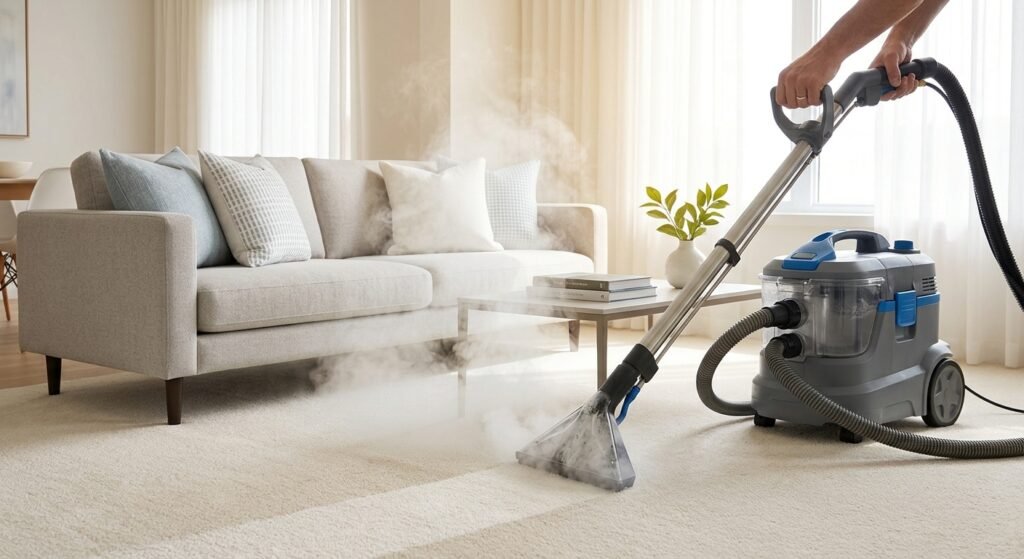
Dry steam vapor is one of the safest and most effective ways to sanitize soft surfaces like wall-to-wall carpets. Steam penetrates deep into pile fibers to kill dust mites and bacteria on contact without oversaturating the underlying carpet pad.
- Temperature Target: Ensure steam equipment reaches at least 170°F to 200°F.
- Drying Time: Keep windows open or run ceiling fans to ensure carpet padding dries completely within 6 to 12 hours.
Enzymatic Cleaners for Organic Stains
For pet accidents, food spills, or biological odors, use specialized enzymatic formulas. Enzymes break down organic proteins and uric acid crystals at a molecular level, permanently eliminating root causes of foul odors rather than temporarily masking them.
For official guidance on approved residential disinfectants and chemical safety standards, consult the [External Link: Insert high-authority external URL here with anchor text like EPA Guidance for Cleaning and Disinfecting Porous Surfaces].
[Image Placeholder 2]
3. Sanitizing Mattresses and Upholstered Furniture
Because we spend nearly a third of our lives in bed, mattresses accumulate body oils, sweat, and skin cells that attract dust mites.
Deodorizing and Sanitizing Mattresses
- Baking Soda & Essential Oils: Sprinkle a generous layer of baking soda mixed with 5–10 drops of lavender or tea tree oil over the entire mattress surface.
- Dwell Time: Allow the mixture to absorb moisture and lingering odors for at least 1 hour.
- Vacuum Thoroughly: Vacuum up the powder using a clean upholstery tool attachment.
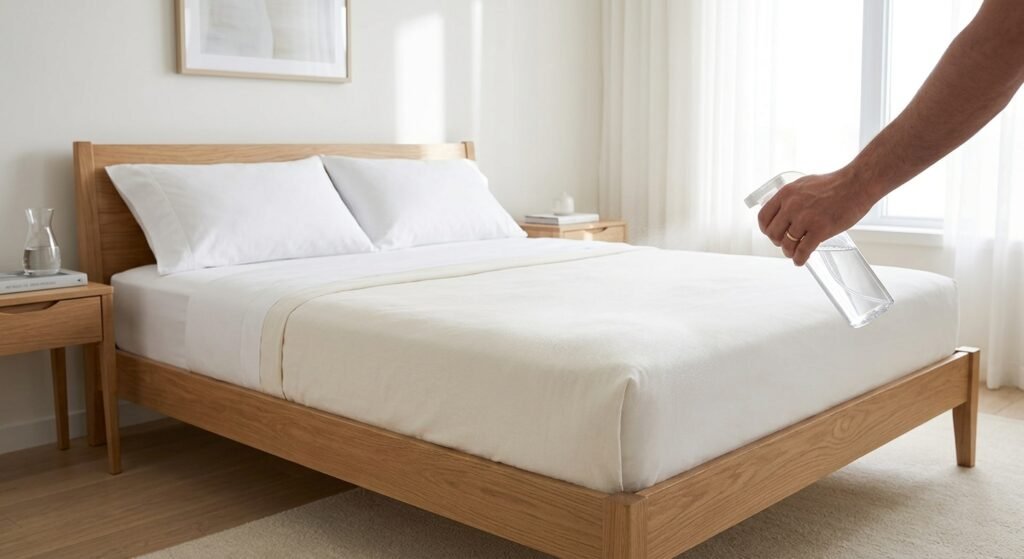
- Targeted Disinfection: Lightly mist a fabric-safe isopropyl alcohol spray (70% concentration) over the mattress surface from a distance of 12 inches, allowing it to air-dry completely https://www.atlassian.com.
Understanding Upholstery Care Tags
Before treating sofas or fabric chairs, verify the manufacturer’s care label:
- Code W: Safe for water-based cleaning products and steam.
- Code S: Requires solvent-based dry-cleaning solvents only; water causes ring stains.
- Code WS: Safe for both water-based and solvent cleaners.
- Code X: Vacuum or brush only; professional dry cleaning required.
If you are coordinating a complete seasonal refresh for your kitchen and living areas, explore our step-by-step [Internal Link: Insert relevant internal URL here with anchor text like Complete Guide to Kitchen Sanitation: Eliminating Odors, Grease, and Pests].
[Image Placeholder 3]
Soft Surface Sanitization Overview Table
| Fabric Type | Primary Hazard | Recommended Method | Drying Requirement |
|---|---|---|---|
| Wall-to-Wall Carpets | Outdoor dirt, bacteria, pet dander | HEPA vacuuming + Steam extraction | 6–12 Hours (Use fans) |
| Mattresses | Moisture, sweat, dust mites | Baking soda absorption + 70% Alcohol mist | 2–4 Hours |
| Upholstery (Code W) | Food spills, body oils | Steam cleaning or enzymatic fabric spray | 3–6 Hours |
| Delicate Rugs / Code S | Color bleeding, water marks | Solvent-based spot treatment or dry powder | Air dry completely |
To protect your exterior doors and entryways from bringing outdoor contaminants onto indoor carpets, view our guide on [Internal Link: Insert relevant internal URL here with anchor text like Spring Pest Control Checklist: How to Seal and Protect Your House].
Frequently Asked Questions (FAQs)
How often should you sanitize soft surfaces like carpets and mattresses?
High-traffic carpets and living room sofas should be deep-cleaned every 6 to 12 months. Mattresses should be vacuumed and spot-sanitized seasonally (every 3 to 4 months) to control dust mites and skin flakes.
Does lysol or disinfectant spray damage fabric upholstery?
Most fabric-safe disinfectant sprays are safe when used as directed. However, always spray from at least 10–12 inches away to prevent oversaturation, and always conduct a spot test on an unexposed area first to ensure colorfastness.
Can steam cleaning kill bed bugs and dust mites in mattresses?
Yes. High-temperature steam (above 160°F or 71°C) instantly kills bed bugs, their eggs, and dust mites upon contact. Ensure the steam wand is moved slowly across the mattress surface without leaving the fabric wet to the touch.
Conclusion
Learning how to sanitize soft surfaces correctly protects your home’s comfort while eliminating hidden bacteria, dust mites, and stubborn odors. By vacuuming with HEPA filtration, using high-temperature steam, respecting upholstery care tags, and allowing thorough drying time, you ensure a clean, healthy living space for your family year-round.
Leave a Reply