Introduction
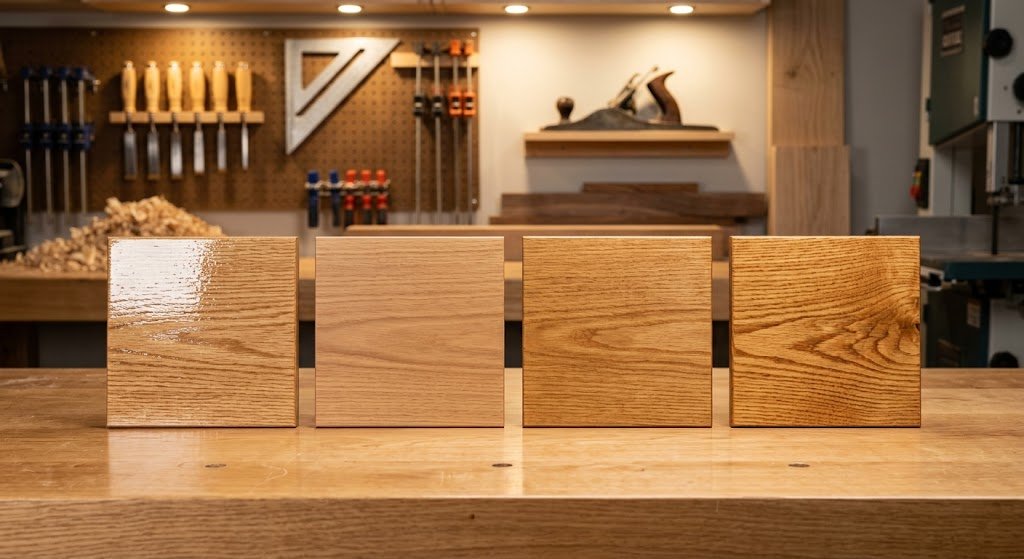
After spending hours cutting, sanding, and assembling timber into a beautiful piece of furniture, selecting the right protective topcoat is the final critical decision that determines its durability, texture, and aesthetic appearance. Navigating this complete guide to wood finishes will help you understand how different topcoats interact with raw timber fibers and shield your creations against moisture, household spills, UV damage, and everyday physical wear https://fibozin.com.
From heavy-duty synthetic resins to traditional penetrating natural oils, every finish offers a unique compromise between ease of application, drying speed, surface sheen, and repairability. Choosing the right topcoat isn’t just about appearance—it’s about matching the finish to the functional demands of the finished object, whether it’s a high-use dining table, decorative alcove shelving, or an intricate heirloom restoration.
Key Takeaways
- Differentiate Surface vs. Penetrating Finishes: Surface coatings (polyurethane, lacquer, shellac) create a solid protective shell over timber, whereas penetrating finishes (tung oil, linseed oil) soak into cellular wood pores to enhance natural grain from within.
- Match Durability to Usage: Polyurethane remains the most durable topcoat for high-wear items like tabletops and counters, while natural oils and paste wax excel on low-impact decorative pieces.
- Consider Repairability: Film-forming finishes like polyurethane require complete stripping and sanding to repair deep scratches, whereas oil and wax finishes can be spot-repaired in minutes.
- Mind Drying and Curing Times: Lacquer dries extremely fast via solvent evaporation, whereas curing oils (like pure tung oil) require days or weeks to fully polymerize through oxidation.
- Ventilation and Safety: Always work in well-ventilated spaces and dispose of oil-soaked rags in water-filled metal containers to prevent spontaneous combustion.
1. Film-Forming Surface Finishes: Polyurethane and Lacquer
Film-forming finishes dry on top of the timber, creating a durable barrier that protects against water, heat, and physical impacts.
Polyurethane: Maximum Protection for High-Wear Surfaces
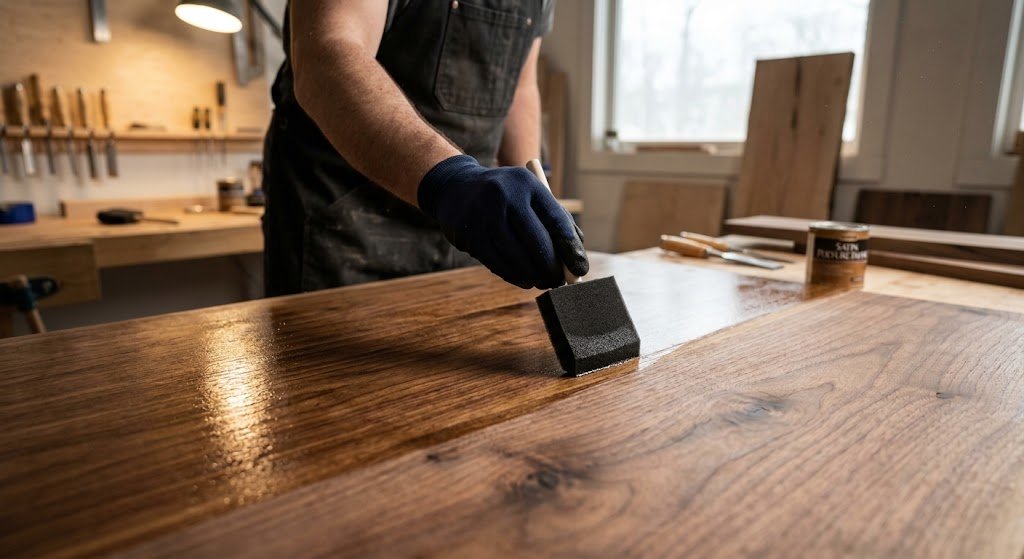
Polyurethane is a plastic resin available in water-based and oil-based formulas. It is widely considered the most scratch- and chemical-resistant topcoat available for home woodworkers.
- Oil-Based Polyurethane: Dries slowly, cures to an extremely tough finish, and imparts a warm amber glow to raw timber.
- Water-Based Polyurethane: Dries quickly with minimal odor and stays crystal clear over time, keeping light woods like hard maple or pine true to color.
Lacquer: Fast Application and Silky Smooth Sheen
Lacquer is a favorite in commercial furniture production due to its rapid drying speed and self-leveling properties.
- Melting Layers: Each new coat of lacquer dissolves slightly into the previous coat, creating a seamless chemical bond without requiring inter-coat sanding.
- Best Application: Applied primarily via HVLP spray systems for factory-smooth satin or high-gloss sheens.
[Internal Link: Read our full step-by-step guide on how to restore and refinish antique wooden furniture]
2. Penetrating Oils: Tung Oil, Linseed Oil, and Hardwax Oils
Unlike film finishes, penetrating oils sink directly into the wood pores to nourish timber fibers and produce a warm, natural low-sheen tactile feel.
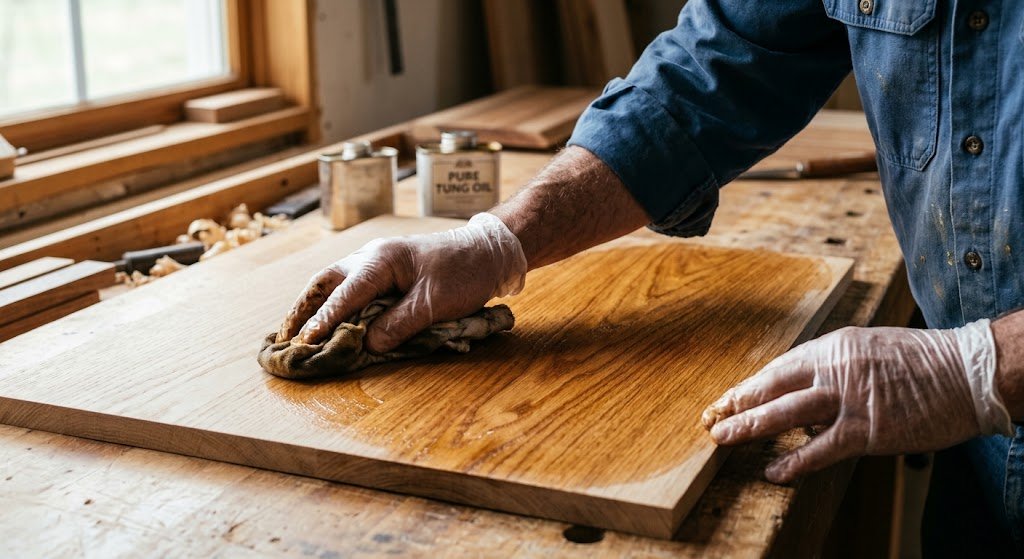
Pure Tung Oil & Boiled Linseed Oil (BLO)
- Pure Tung Oil: Derived from the nut of the tung tree, pure tung oil offers good water resistance and cures naturally without toxic driers, making it food-safe once fully cured.
- Boiled Linseed Oil: Flaxseed oil treated with metallic chemical driers to speed up cure times. It amberizes wood beautifully but provides lower water resistance compared to tung oil.
Modern Hardwax Oils
Hardwax oils combine natural vegetable oils with protective waxes (such as carnauba and beeswax). They penetrate deep while leaving a thin, water-repellent wax seal on the surface, offering an ideal middle ground for dining tables and hardwood flooring Wikipedia.
3. Traditional Paste Wax: Enhancement and Maintenance
Paste wax is one of the oldest decorative finishes, traditionally formulated from carnauba wax, beeswax, and solvent.
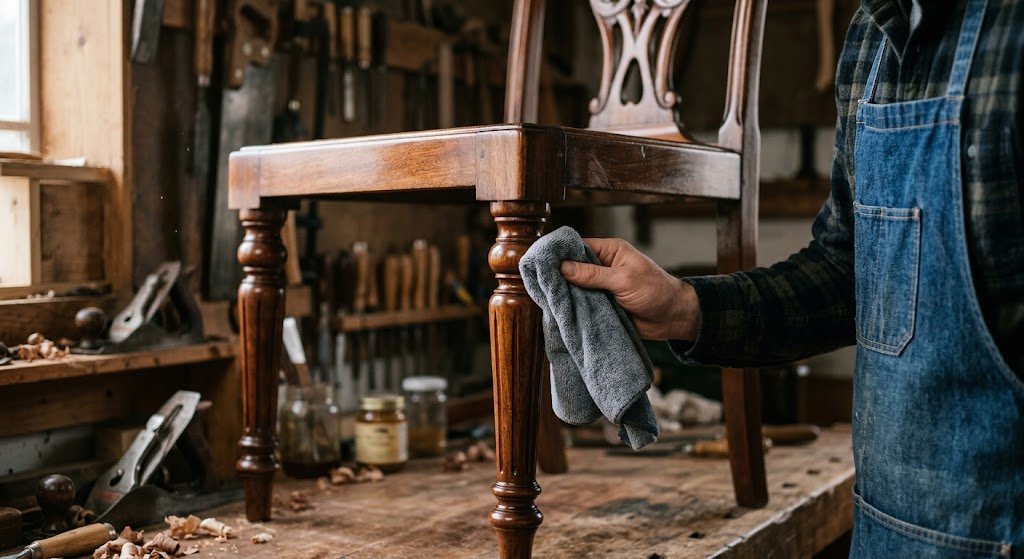
When to Use Paste Wax:
- Over Topcoats: Paste wax acts as a sacrificial layer over cured polyurethane, lacquer, or shellac, protecting the base finish from micro-scratches and fingerprint smudges.
- On Low-Touch Decorative Pieces: Applied directly onto raw or oil-treated wood, paste wax delivers a soft, buttery tactile finish with moderate dust protection.
[External Link: Review Wood Magazine’s complete technical breakdown on topcoat chemistry and chemical resistance tests]
Wood Finish Selection Guide: At a Glance
| Finish Type | Protection Level | Application Method | Cure / Dry Time | Repairability | Sheen Options |
|---|---|---|---|---|---|
| Polyurethane | Very High | Brush, Wipe, Spray | 4 to 24 Hours | Low (Requires Stripping) | Matte, Satin, Semi-Gloss, Gloss |
| Lacquer | High | HVLP Spray, Aerosol | 15 to 30 Minutes | Medium (Re-melts into previous coat) | Satin, Semi-Gloss, High Gloss |
| Penetrating Oils | Low to Moderate | Wipe-On, Wipe-Off | 12 Hours to 7 Days | Very High (Simple Spot Wipe) | Matte, Natural Low-Luster |
| Paste Wax | Low | Buff-On, Polish | 10 to 15 Minutes | Very High (Simple Re-buffing) | Soft Satin Luster |
Frequently Asked Questions (FAQs)
What is the most durable wood finish for a dining room table?
Oil-based or water-based polyurethane is the most durable finish for dining room tables, desk tops, and kitchen counters. It provides high resistance to moisture rings, alcohol spills, scratching, and heat.
Can I apply polyurethane over an oil finish?
Yes, but only after the penetrating oil (such as boiled linseed oil or pure tung oil) has fully cured, which typically takes 5 to 7 days depending on temperature and humidity. Applying polyurethane over wet oil will cause peeling and adhesion failure.
What is the difference between tung oil and boiled linseed oil?
Pure tung oil is 100% natural, highly water-resistant, non-yellowing, and food-safe when fully cured. Boiled linseed oil contains chemical drying agents, cures faster, amberizes wood more intensely, but offers less moisture protection.
Conclusion
Consulting this complete guide to wood finishes equips you with the knowledge needed to select the perfect balance of protection, beauty, and maintenance for your woodworking builds. Whether you choose the rugged water resistance of polyurethane, the rapid industrial application of lacquer, the rich warmth of penetrating oils, or the soft luster of paste wax, matching the right topcoat to your timber guarantees your creations stay protected for decades.
Leave a Reply