Introduction
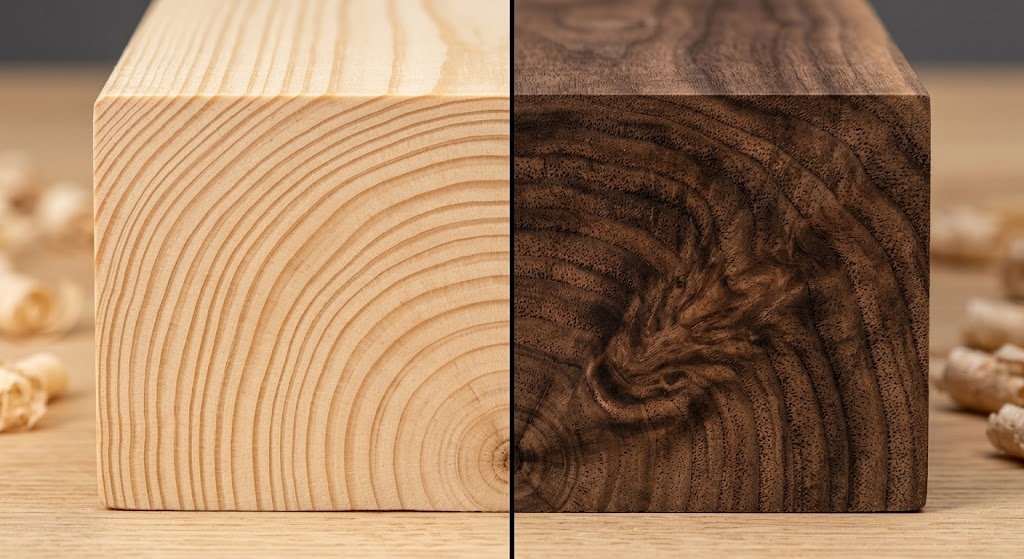
Choosing the right material is the single most critical decision in any woodworking, construction, or furniture project. Select the wrong species, and your finished build may warp under load, deteriorate outdoors, or inflate your budget unnecessarily. The fundamental Choose the Right Timber for Any Project selection comes down to softwood vs. hardwood—a classification that often causes confusion for beginners and experienced DIYers alike https://fibozin.com.
Contrary to popular belief, the distinction between softwoods and hardwoods is not strictly about physical hardness or strength. Instead, it is rooted in botanical biology and seed reproduction. Understanding how these structural differences impact durability, workability, and cost ensures that you select the ideal timber for any indoor or outdoor application.
Key Takeaways
- Botanical Difference: Softwoods originate from gymnosperm trees (evergreens/conifers with cones and needles), whereas hardwoods come from angiosperm trees (broadleaf deciduous trees with flowers and enclosed seeds).
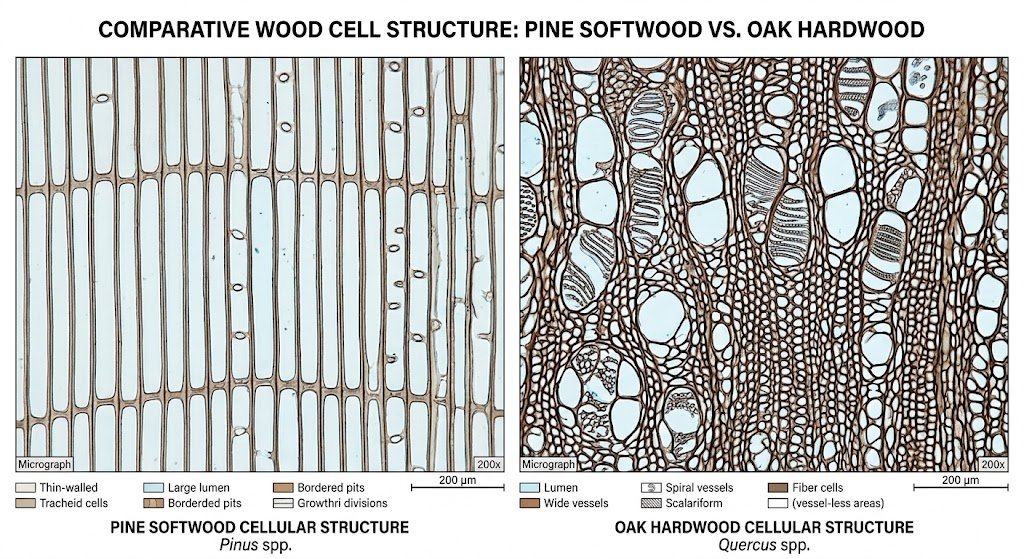
- Density & Cellular Structure: Hardwoods feature specialized pore structures (vessels) that create denser, more durable wood grains, while softwoods consist primarily of tracheid cells.
- Cost Efficiency: Softwood trees grow significantly faster, making timber like pine and cedar more abundant and affordable than slow-growing hardwoods like oak and walnut.
- Workability: Softwoods are generally easier to cut, drill, and shape with handheld power tools, making them preferred for structural framing and quick weekend DIY projects.
- Finish & Aesthetic: Hardwoods offer rich, complex grain patterns and deep natural coloration that elevate fine furniture, cabinetry, and hardwood flooring.
1. Botanical and Structural Differences Explained
The primary distinction between softwood and hardwood lies in the tree’s reproductive method and internal cellular arrangement rather than its physical density.
Botanical Definitions:
- Softwoods (Gymnosperms): Coniferous trees like pine, spruce, fir, and cedar retain their needles year-round. They produce exposed seeds in cones and feature a simple, uniform cellular structure dominated by long tracheid cells that transport sap.
- Hardwoods (Angiosperms): Broadleaf trees like oak, maple, walnut, and mahogany shed their leaves annually in autumn. They produce enclosed seeds (nuts or fruit) and possess complex pore vessels that yield dense grain patterns Wikipedia.
Fun Fact: Balsa wood—one of the lightest and softest woods used in model building—is botanically classified as a hardwood because it comes from a broadleaf angiosperm tree!
[Internal Link: Read our full guide on 5 easy DIY furniture projects you can build in a single weekend]
2. Comparing Softwood vs Hardwood: Density, Cost, and Uses
To select the best lumber for your build, evaluate how softwoods and hardwoods compare across critical performance metrics:
| Feature | Softwood (e.g., Pine, Cedar, Fir) | Hardwood (e.g., Oak, Walnut, Maple) |
|---|---|---|
| Growth Rate | Fast (10–30 years to harvest) | Slow (50–100+ years to harvest) |
| Price Point | Budget-friendly | Premium / Investment |
| Weight & Density | Lightweight to moderate | Heavy and dense |
| Tool Wear | Low impact on saw blades | Higher resistance; dulls tools faster |
| Moisture Resistance | Variable (Cedar/Redwood high, Pine low) | Generally high (especially White Oak & Teak) |
| Common Uses | House framing, decks, trim, DIY furniture | Fine furniture, cabinets, flooring, cutting boards |
3. When to Choose Softwood for Your Project
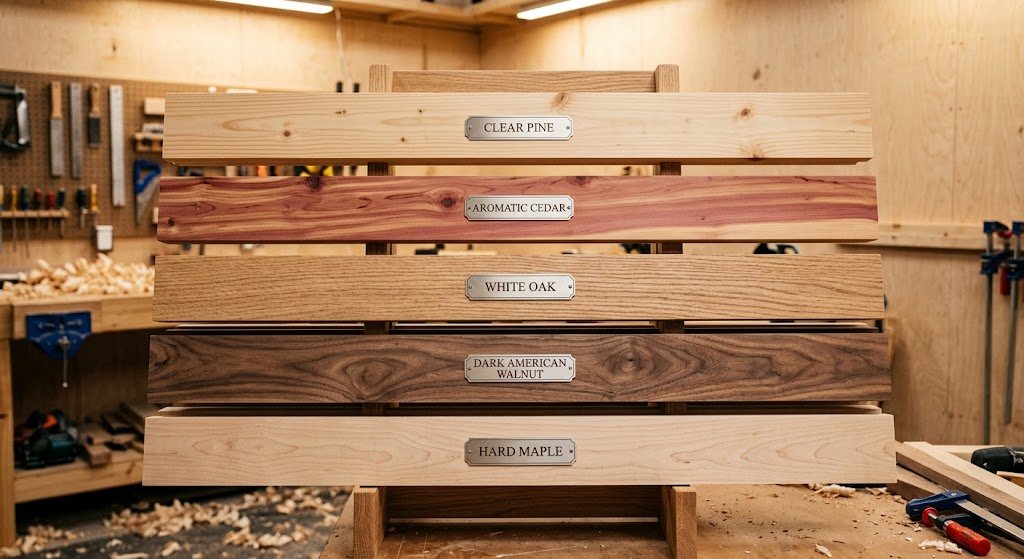
Softwoods account for roughly 80% of all timber used in construction and woodworking worldwide due to their versatility and affordability.
Best Applications for Softwood:
- Structural Framing: Dimensional lumber (2x4s, 2x6s) made from Douglas Fir or Hem-Fir forms the structural skeleton of residential homes.
- Outdoor Decks & Fences: Pressure-treated pine and naturally weather-resistant cedar are perfect for exterior structures exposed to moisture.
- Beginner Carpentry: Light, easy-to-cut softwood allows beginners to practice pocket-hole joinery and saw cuts without burning blade teeth.
4. When to Choose Hardwood for Maximum Longevity
When a project demands superior scratch resistance, structural load bearing, or heirloom-quality aesthetics, hardwoods are unmatched.
Best Applications for Hardwood:
- High-Traffic Flooring: Hard maple and white oak resist denting from heavy furniture, pet claws, and foot traffic.
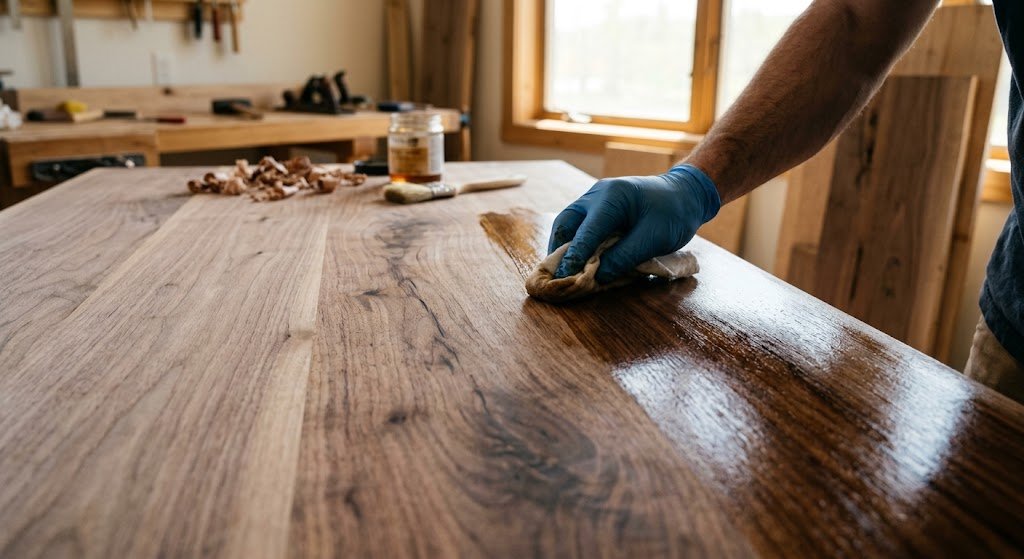
- Fine Cabinetry & Tables: Walnut and cherry offer rich natural tones that age gracefully without needing artificial wood stains.
- Food-Safe Kitchen Tools: Closed-grain hardwoods like hard maple and cherry are non-porous, making them ideal for cutting boards and wooden utensils.
[External Link: Consult the USDA Wood Handbook for technical lumber density and strength data]
Essential Tips for Buying Lumber
- Check Janka Hardness Ratings: The Janka scale measures a wood species’ resistance to wear and denting. Higher ratings (e.g., Hard Maple at 1,450 lbf vs. Eastern White Pine at 380 lbf) indicate greater durability.
- Mind Moisture Content: Ensure interior furniture wood has a moisture content between 6% and 8% to prevent warping or checking once brought indoors.
- Inspect for Straightness: Sight down the edge of boards at the lumberyard to reject cupped, twisted, or bowed timber before buying.
Frequently Asked Questions (FAQs)
Is softwood always softer than hardwood?
No. While hardwoods are generally denser, exceptions exist. For example, Yew is a softwood that is significantly harder than hardwoods like Balsa and Poplar.
Can I mix softwood and hardwood in a single furniture build?
Yes. A common woodworking strategy is using affordable softwoods (like pine or poplar) for hidden internal framing or drawer carcases, while reserving premium hardwoods (like oak or walnut) for visible face frames and table tops.
Which is better for outdoor furniture, softwood or hardwood?
Naturally rot-resistant softwoods (like Western Red Cedar and Redwood) or dense tropical hardwoods (like Teak and Ipe) perform best outdoors. Standard un-treated pine softwood will decay quickly if exposed to moisture without a protective finish.
Conclusion
Understanding the core differences in the softwood vs. hardwood debate empowers you to make smarter material choices, balance your project budget, and achieve long-lasting results. Use budget-friendly softwoods for structural framing, outdoor decks, and quick weekend projects, while investing in durable hardwoods for heirloom furniture, high-traffic flooring, and fine cabinetry. Pick the right species for your next build, measure twice, and craft with confidence!
Leave a Reply