Persistent floor creaks and misaligned, sticking doors are among the most frustrating minor issues in any homehttps://fibozin.com/ . Every step across a squeaky floorboard or every effort to force a rubbing wooden door shut serves as a reminder of structural wear. Over time, seasonal humidity fluctuations, natural house settling, and routine wear loosen fasteners and shift timber frames.
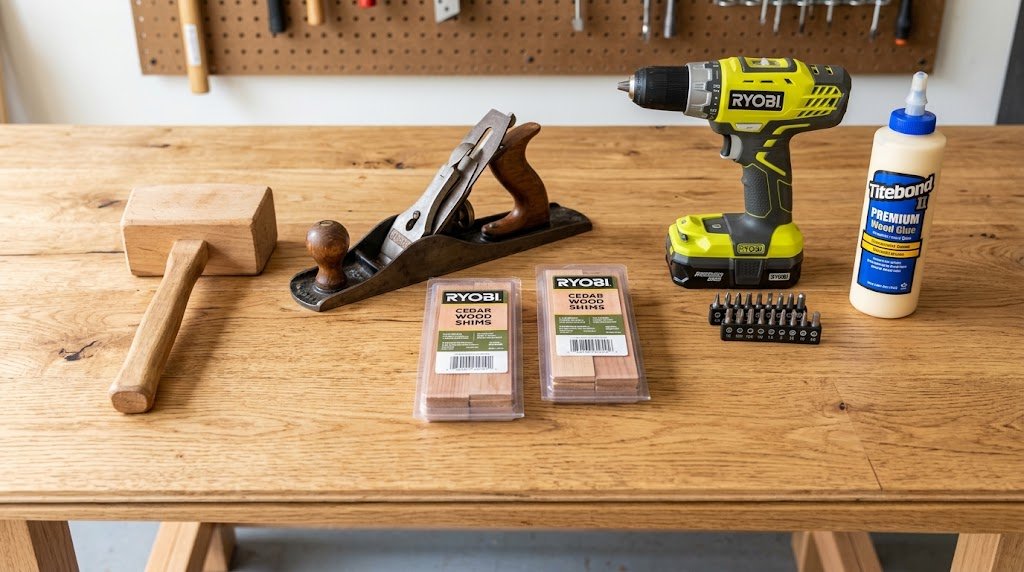
Fortunately, you do not need to hire a professional contractor to solve these everyday carpentry headaches. Learning how to using simple tools and targeted techniquThe Ultimate DIY Carpentry Guide: How to Repair Squeaky Floors and Wooden Doorses will save you money while restoring quiet, smooth functionality to your living space. This ultimate guide walks you through the exact root causes of squeaks and binding doors, providing actionable, professional-grade fixes you can execute yourself.
Key Takeaways
- Identify the Friction Source: Squeaks occur when subflooring rubs against joists or loose nails, while door binding is usually caused by sagging hinges or seasonal wood expansion.
- Fix Squeaks from Above or Below: Use wood shims and subfloor screws from underneath, or specialized counter-snap screws driven directly through hardwood or carpeted surfaces from above.
- Hinge Adjustments First: Before shaving or planing a sticking wooden door, always inspect and tighten hinge screws or swap short screws for 3-inch framing screws.
- Control Humidity: Wood naturally expands in humid months and contracts in dry months; monitoring indoor moisture levels prevents recurring wooden door and floor issues.
Step-by-Step Guide to Fixing Squeaky Hardwood Floors and Subfloors
Floor squeaks happen when friction occurs between wood components—typically the subfloor board rubbing against a floor joist, loose finish nails, or adjacent tongue-and-groove planks.
1. Fixing Squeaks from Underneath (Basement or Crawl Space Access)
If you have access to the floor joists from below, locating and silencing the squeak is straightforward:
- Locate the Creak: Have a second person walk directly over the squeaky floor while you stand below to locate the movement.
- Insert Lubricated Wood Shims: Coat a thin wooden shim in carpenter’s wood glue and slide it gently into the gap between the joist and subfloor. Do not drive it in too hard, or you will raise the floorboard above.
- Install a Joist Bracing Bracket: For wider gaps, attach a specialized metal subfloor-to-joist bracket or drive a pocket screw through the joist into the underside of the subfloor.
2. Fixing Squeaky Floors from Above (Hardwood & Carpet)
When crawl space access is impossible, top-down fixes are your best option:
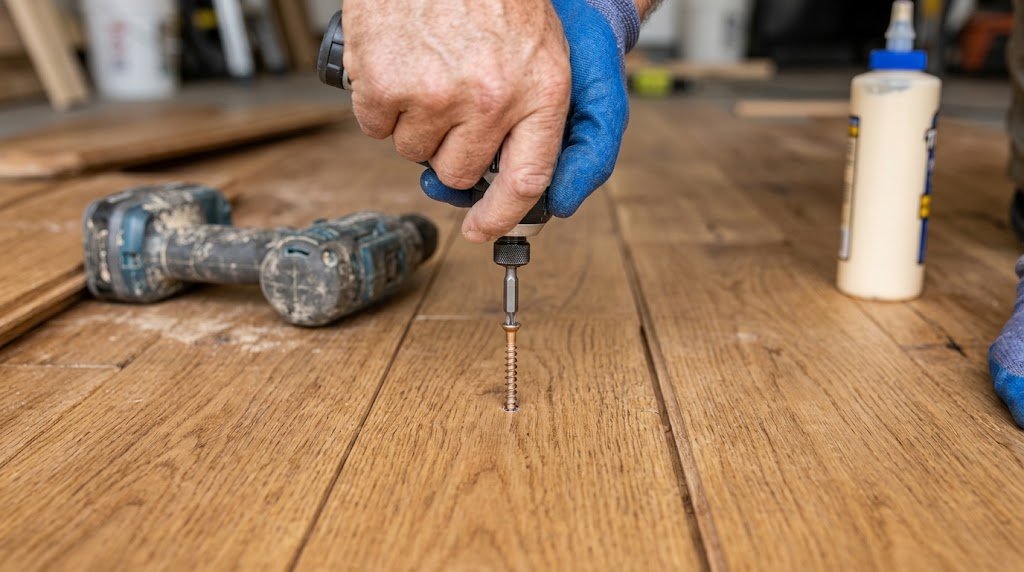
- For Hardwood Planks: Drive a breakaway counter-snap floor screw through the surface into the joist. Once driven flush, snap the head off below the wood surface using the driver fixture, then fill the tiny hole with color-matched wood putty.
- For Carpeted Floors: Locate the underlying joist using a stud finder, drive a score-headed carpet screw directly through the carpet pad into the joist, and snap off the head so it sits hidden beneath the carpet pile.
- Quick Planking Lubricant: For minor surface squeaks between tongue-and-groove planks, dust powdered graphite or talcum powder into the seams and step on the area to work it into the joint.
[External Link: Forest Products Laboratory guide on wood moisture expansion and structural movements]
How to Repair Sticking, Rubbing, and Misaligned Wooden Doors
When a door drags against its jamb or refuses to latch smoothly, the culprit is usually sagging hinges, loose screws, or swelling from ambient humidity.https://fibozin.com/
1. Tighten and Adjust Sagging Hinges
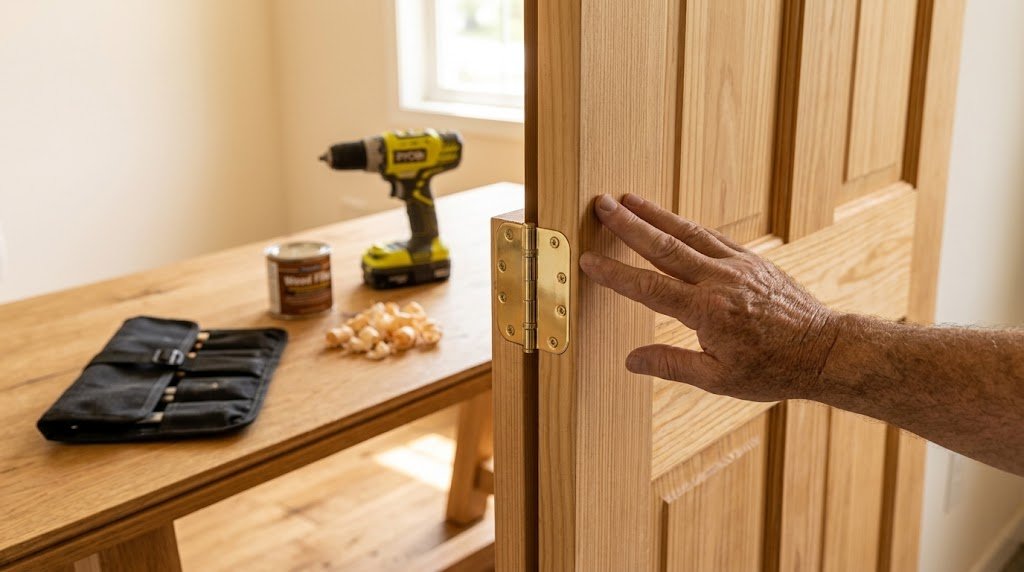
- Inspect Hinge Screws: Open the door and check if the top hinge screws have pulled loose from the jamb.
- Replace Short Screws: Remove the short factory screws from the top hinge on the jamb side and replace them with 3-inch wood screws repair squeaky floors and wooden doors . These long screws bite deep into the solid wall framing behind the jamb, pulling the door back into alignment.
- Plum the Hinge with Shims: If the door still rubs on the latch side, back out the hinge leaf and insert a thin cardboard shim behind the bottom hinge to tilt the door frame level.https://www.atlassian.com
2. Planing and Trimming Swollen Wooden Doors
If tightening hinge hardware does not eliminate rubbing, the door itself may require trimming:
- Mark the Friction Zone: Rub chalk along the door frame edge, close the door, and open it again to see where the chalk transfers onto the door leaf.
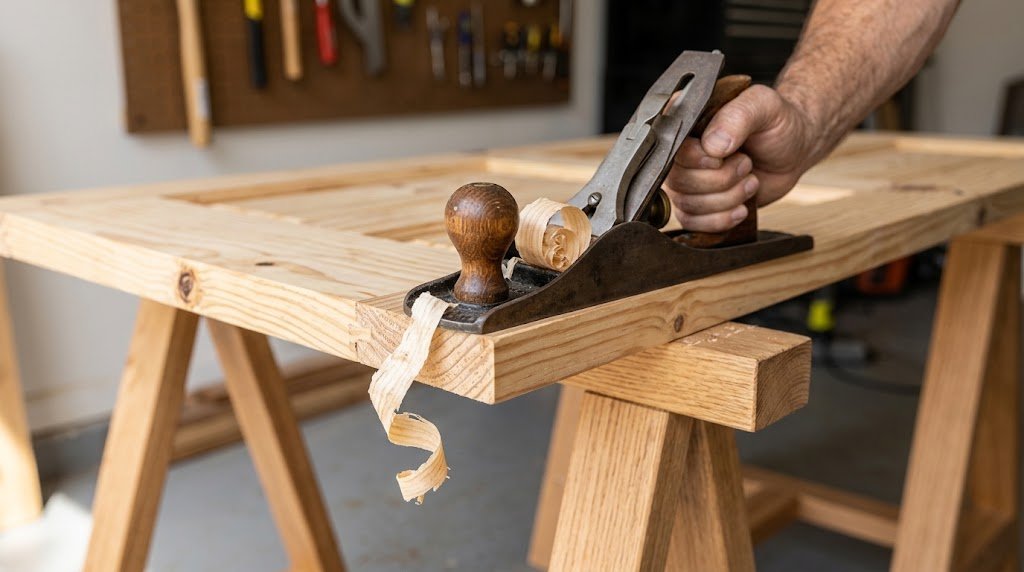
- Sand or Plane the High Spots: For light rubbing, sand the marked area with 120-grit sandpaper. For heavy binding, unhang the door, lay it on sawhorses, and use a hand plane or block plane to shave down the high edge in smooth, even passes toward the wood grain.
- Seal the Bare Edges: Apply coat of paint or wood sealant over shaved edges to prevent moisture absorption and future swelling.
Preventative Maintenance to Keep Floors and Doors Quiet
Proper ongoing maintenance prevents timber movement and hardware failure before they turn into major structural repairs.
Simple Moisture & Hardware Maintenance Routine
- Maintain Stable Indoor Humidity: Keep home relative humidity between 35% and 55% using dehumidifiers in summer and humidifiers in winter to minimize wood swelling and shrinkage.
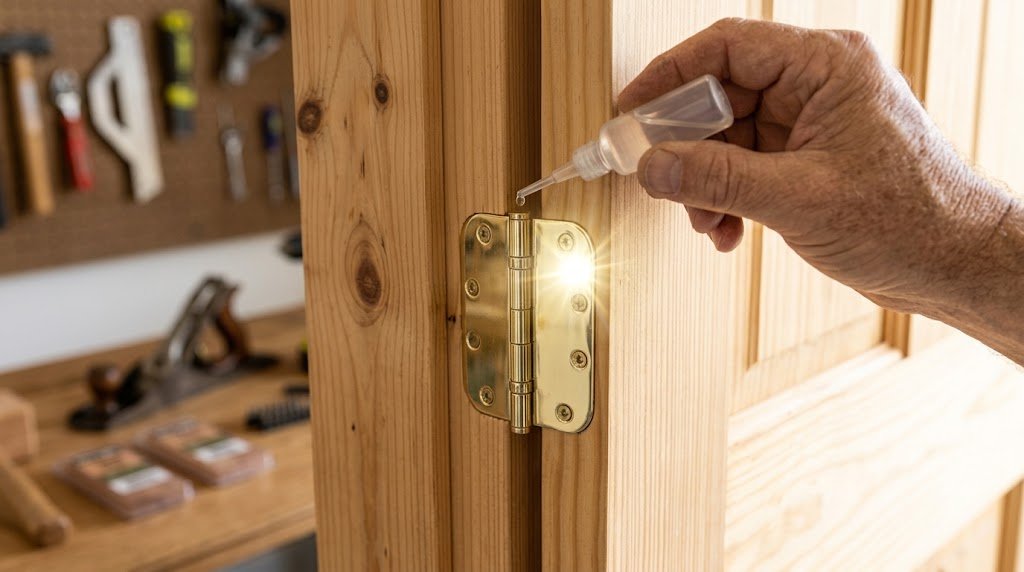
- Lubricate Hinge Pins: Apply silicone spray lubricant or white lithium grease to door hinge pins annually to eliminate creaking hinges and reduce friction wear.
- Check Fasteners Annually: Inspect door hardware and subfloor fasteners twice a year to tighten any hardware loosened by everyday home traffic.
Conclusion
Knowing how to repair squeaky floors and wooden doors empowers you to solve irritating structural creaks and sticking jams independently. By addressing floor joist gaps with targeted shims, driving hidden breakaway screws through subfloors, securing sagging hinges with framing screws, and planing swollen edges, you can keep your home running quietly and smoothly. With a few basic tools and proper safety precautions, these essential carpentry repairs provide long-lasting results for any homeowner.
Frequently Asked Questions (FAQs)
Why do my wooden doors stick only during the summer?
Wooden doors absorb ambient atmospheric moisture during humid summer months, causing the wood fibers to expand against the door jamb. Maintaining low indoor humidity with air conditioning or a dehumidifier usually resolves seasonal binding.
Can I fix a squeaky floor without accessing the floor joists underneath?
Yes, you can repair squeaky floors and wooden doors above by using specialized breakaway floor screws designed for hardwood or carpet. These screws pull the subfloor tightly against the joist and snap off below the surface level without leaving visible damage.
Should I lubricate squeaky floorboards with WD-40?
No, never use standard spray lubricants like WD-40 on wooden floorboards. Petroleum-based lubricants degrade wood fibers and finish coatings. Instead, use powdered graphite, talcum powder, or physical mechanical fasteners to stop friction squeaks.
Leave a Reply